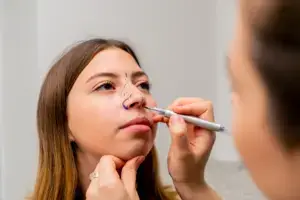
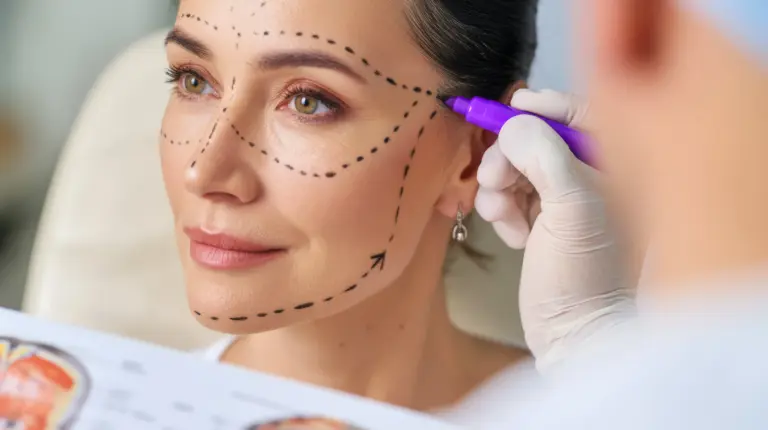
Facelift marketing has changed because facelift patients have changed. They’re younger than they used to be, they arrive primed by the “Ozempic effect,” and — critically — they now research by technique, searching “deep plane facelift near me” before they search for a surgeon at all. Win by being the credible, findable answer to a technique-led, credential-driven search.
This playbook covers the full stack that fills a facelift consult calendar, with a deep section on facelift SEO and the AI-search layer (AIO, AEO, GEO) most agencies still ignore:
- Be found: technique-led facelift SEO (organic + local) and AI search
- Capture intent: Google Ads & PPC for high-intent, high-CPC searches
- Build trust: a credential-forward website and a categorized before-and-after gallery
- Convert the decision: reviews, technique-comparison content, and nurture
What is facelift marketing? Facelift marketing is the system a facial plastic surgeon uses to earn qualified consultations from patients researching facial-rejuvenation surgery — combining SEO and AI search to be found, a conversion-focused website and before-and-after gallery to build trust, paid search to capture high-intent moments, and reviews plus nurture to convert a considered decision. Because patients now research by technique (deep plane, SMAS, mini) and the result is permanent and highly visible, effective facelift marketing is pull marketing that serves existing demand and leads with surgeon credentials.
The facelift is having a moment — and it’s a bigger, younger, more technique-literate moment than ever. It’s the second most-performed facial surgical procedure in the United States (behind eyelid surgery) and rose again in 20241. Among facial plastic surgeons the demand is near-universal: roughly 90% of AAFPRS members perform facelifts every year, and the average member’s facelift volume is up about 60% since 20172. Two forces are driving it — the “Ozempic effect,” where rapid GLP-1 weight loss leaves facial sagging that only surgery corrects, and the rise of the deep plane facelift, a technique now pulling a distinctly younger crowd2.
That last shift is the one that rewrites the marketing. Facelift patients no longer search only “facelift near me.” They search “deep plane facelift,” “SMAS vs deep plane,” “mini facelift recovery” — they’ve researched the techniques before they’ve chosen a surgeon, and they’re screening hard on credentials (the AAFPRS itself urges patients to verify board certification for this procedure3). The practices winning facelift consults in 2026 are the ones that show up as the credible answer to that technique-led search, on Google and in the AI results above it. This guide is how you become that answer.

Why Facelift Marketing Is Different from Every Other Procedure
Facelift is a facial-plastic specialty, and it behaves unlike almost any other cosmetic procedure. Four forces set facelift apart — and they reinforce one another.
1. Patients research by technique, not just procedure
This is the defining shift. The rise of the deep plane facelift has made technique a first-class search term: patients arrive Googling “deep plane vs SMAS facelift,” “extended deep plane,” or “mini facelift,” and they expect a surgeon’s site to speak that language fluently. A practice with a single generic “facelift” page is invisible to the patient who is specifically seeking a deep-plane specialist. Technique-led search is the biggest opportunity — and the biggest gap — in facelift marketing today.
2. A permanent result on the most visible surface there is
The outcome defines the face for years and can’t be hidden or reversed. That raises the trust threshold as high as it goes. Patients aren’t just judging skill — they’re deciding whether to trust you with the way they’ll look for a decade. Your before-and-after gallery, credentials, and reviews carry that decision long before the ad copy does.
3. A credential-driven decision
Facelift is the procedure where “board-certified facial plastic surgeon” is a genuine screening criterion — the AAFPRS publicly urges patients to verify credentials before choosing a surgeon for it3. That makes E-E-A-T and surgeon-entity signals not just an SEO tactic but a match for how patients actually choose. Marketing that foregrounds real credentials outperforms marketing that leads with price or promotion.
4. A younger, GLP-1-driven demographic
Facelift patients are trending younger — the share aged 35–55 has climbed in recent years, and most facial plastic surgeons expect the average age to keep dropping2. The “Ozempic effect” is a major driver: rapid weight loss leaves facial laxity that non-surgical treatments can’t fully address, sending a new, younger cohort toward surgery. That reshapes messaging, channel mix (more Instagram/TikTok research), and the questions your content has to answer.
The Facelift Patient Journey (and Where Marketing Plugs In)
A facelift patient’s path is longer and more information-dense than a walk-in aesthetic treatment. It typically runs: technique discovery (“what is a deep plane facelift?”) → surgeon shortlisting (“deep plane facelift [city]”) → evaluation (galleries, credentials, reviews) → consult. At the evaluation stage, patients rank surgeons roughly like this:
- Specialization & technique credibility — Is this a facial-plastic specialist who genuinely performs the technique the patient wants? Board certification and fellowship training weigh heavily.
- Visible results — Does the gallery show outcomes like theirs — their age, their technique, natural (not “pulled”) results?
- Detailed reviews — Do real patients describe the experience, the recovery, and the naturalness of the result?
- The consultation — Did the surgeon assess honestly and recommend the right technique rather than a one-size-fits-all lift?
- Price — Only once the above are satisfied, and rarely decisive.
Map channels to this journey and the priority order writes itself: technique discovery and shortlisting happen in search and AI answers (SEO, GEO, content); evaluation happens on your site and in reviews; the final nudge happens in the consult and nurture. The sections below follow that order, each linking up to the matching plastic surgery digital marketing service — and across to our sibling rhinoplasty marketing playbook, since the two facial procedures share an audience and a strategy.
Facelift SEO: The Deep Dive
What is facelift SEO? Facelift SEO is the practice of optimizing a surgeon’s website and online presence to rank in organic and local search — and be cited in AI search — for the terms facelift patients actually use: the procedure, its techniques (deep plane, SMAS, mini, mid-facelift), adjacent procedures (neck lift), and cost and recovery questions. Unlike broad plastic surgery SEO, it is a technique-led content cluster anchored by a board-certified facial plastic surgeon, engineered for a Your-Money-or-Your-Life topic where Google weights credentials and trust heavily.
This is the part most practices — and most agencies — get backwards. They publish one “facelift” page and consider the procedure covered. But facelift is now a whole technique universe, and the practices that build it that way own the organic results and the AI answers. Here’s the architecture that wins, built the way we build every plastic surgery SEO engagement.
1. Keyword architecture: cluster by technique
One facelift page cannot rank for the full range of facelift intent — especially now that intent is technique-specific. Build a hub-and-spoke cluster: a primary facelift page as the hub, with dedicated spokes for each technique and adjacent procedure. Each spoke targets its own keywords, carries its own before-and-after subset, and answers the questions unique to that patient.
| Cluster page | Primary intent | Representative queries |
|---|---|---|
| Facelift (hub) | Procedure overview / shortlist | facelift [city], best facelift surgeon, facelift cost |
| Deep plane facelift | High-value, technique-specific, travels | deep plane facelift, deep plane vs SMAS, deep plane facelift [city] |
| SMAS facelift | Technique comparison | SMAS facelift, traditional facelift technique |
| Mini / mid-facelift | Younger patient, lower downtime | mini facelift, mid facelift, weekend facelift recovery |
| Neck lift | Adjacent / bundled procedure | neck lift, facelift and neck lift, jowl surgery |
| Cost & recovery | Decision-stage research | facelift cost [city], facelift recovery timeline |
This structure captures long-tail technique volume a single page never could, demonstrates topical authority to Google, and gives AI systems clean, specific passages to lift. For the fuller method, see our guide on how to rank for cosmetic surgery procedures in 2026 and the aesthetic playbook for treatment pages that rank locally.
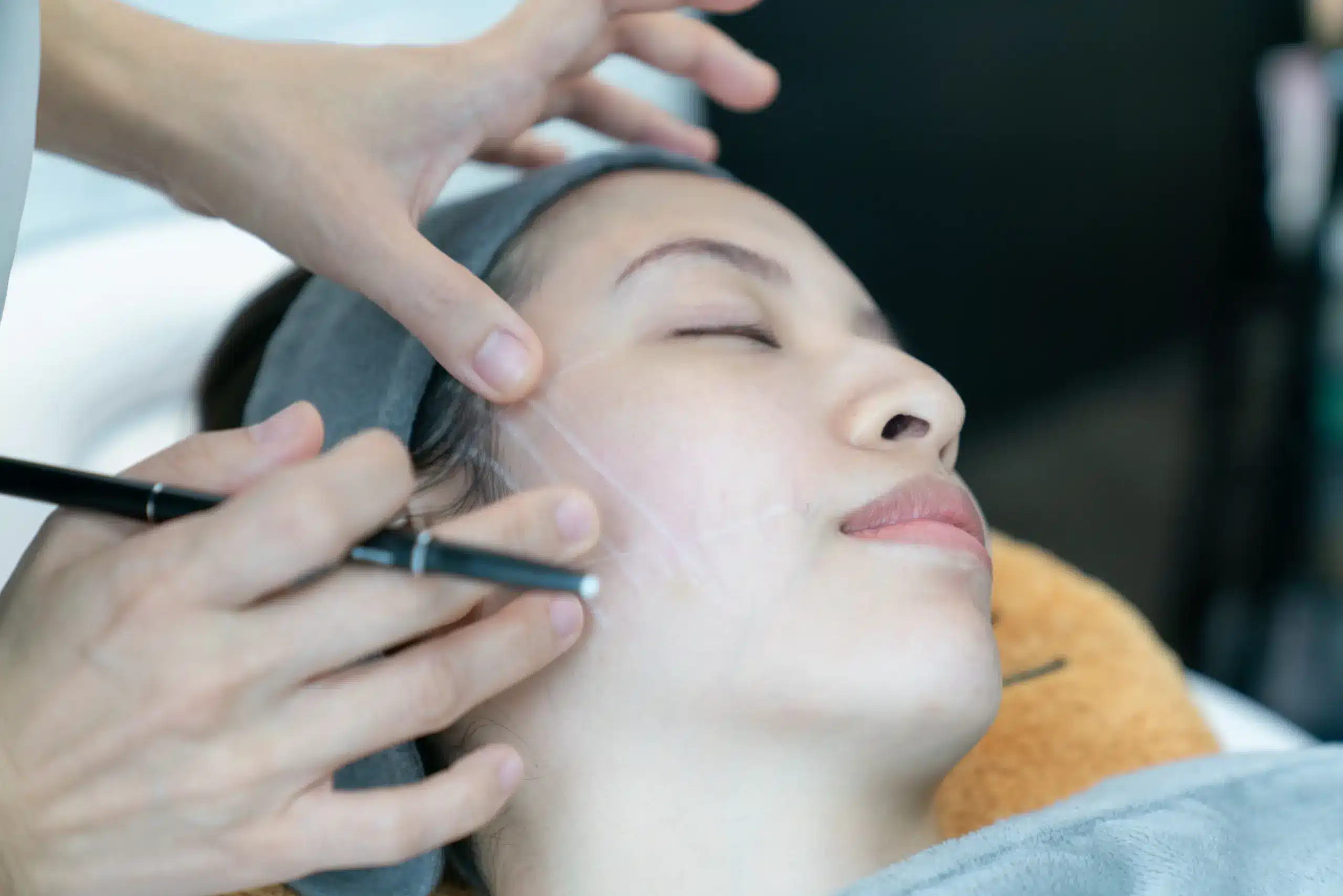
2. Technical SEO & schema: the part AI actually reads
Facelift is a Your-Money-or-Your-Life (YMYL) medical topic, so the technical floor is high. Non-negotiables:
- Speed & mobile — a facelift page that stalls on a phone loses the patient mid-research, since that’s where nearly all of it happens; keep loads quick and layout stable. See Core Web Vitals for medical websites.
- Procedure & FAQ markup — MedicalProcedure, FAQPage, and MedicalWebPage schema label each technique page for search and AI, which is what makes a passage eligible to be quoted. See schema markup for plastic surgery clinics.
- Gallery data — ImageObject markup plus true alt text on every consented result feeds both image search and multimodal AI.
- Surgeon entity — Physician/Person schema is the thread tying every page back to the credentialed surgeon below.
3. Local SEO & the Map Pack
General facelift and neck-lift cases are largely local — patients search “facelift [city]” and the Google Map Pack sits above the organic results, where most local clicks go to the top three listings5. Winning it takes a fully built Google Business Profile (services, real before-and-after photos, weekly posts, seeded Q&A), consistent citations, and steady review velocity. Our Google Maps ranking factors guide breaks down the signals. Signature techniques like deep plane travel further, so those pages can target a wider radius (more on that under budget).
4. E-E-A-T: why the surgeon’s credentials are a ranking factor
For a YMYL topic like facelift surgery, Google leans hard on Experience, Expertise, Authoritativeness, and Trustworthiness — and facelift patients screen on exactly the same signals. A page attributed to a board-certified facial plastic surgeon, with fellowship training, technique specialization, case volume, and a consistent entity across the site and third-party profiles (RealSelf, Healthgrades, hospital and society pages), will out-rank an anonymous page every time. It’s also the single biggest lever for being cited by AI.
The surgeon page: your entity anchor
One page has to carry the surgeon’s whole record — board certification, fellowship, hospital and society affiliations (AAFPRS included), publications, and the techniques they’re known for — with outbound links to their RealSelf, Healthgrades, and hospital profiles. Tagged with Physician/Person schema and referenced by @id sitewide, that page becomes the anchor every other mention resolves back to.
The mini-E-E-A-T card: reinforce it on every page
The credential signal can’t live only on the bio page. Every technique page and clinical post should end with a compact mini-E-E-A-T card that puts the surgeon’s name on the content and links back to the full record. A good one carries:
- Name plus the credentials that matter — MD, FACS, board certification, fellowship
- The signature technique and a volume or years-in-practice marker
- A “medically reviewed by” line with the date it was last checked
- Links out to the full bio and to profiles a patient can independently verify
Dr. [Surgeon Name], MD, FACS
Board-certified facial plastic surgeon · Fellowship-trained · Deep plane facelift specialist · 900+ facial rejuvenation procedures
Full bio · RealSelf · Healthgrades · Last reviewed Aug 2026
Repeated on every page, that small card punches above its weight: it puts a name on otherwise anonymous content, holds the surgeon entity steady across the whole site, hands AI a verifiable author to credit, and echoes the exact credential check facelift patients are already running themselves. Template it once and apply it everywhere — the method is in our guide to building E-E-A-T for plastic surgery websites, and the payoff is what our SEO for plastic surgeons work delivers.
See how Skinspire builds facelift SEO →AI Search Optimization for Facelift: AIO, AEO & GEO
How do you get a facelift practice recommended by AI? Answer the technique questions patients type into ChatGPT and see in Google’s AI Overviews — “deep plane vs SMAS,” “is a mini facelift worth it,” “how long does a deep plane last” — as tight, sourced passages, then back them with FAQ and MedicalProcedure schema, a consistent board-certified-surgeon entity, and citations to bodies like the AAFPRS. Facelift’s funnel opens with explanation-seeking, so the practice that answers the technique questions cleanly is the one the models quote.
Two things now sit between a facelift patient and a surgeon’s site: the ten blue links, and the AI answer stacked on top of them. Those answers already surface on close to a third of Google searches and are quietly draining the clicks that used to reach the top organic result4. Facelift is especially exposed, because the decision begins with a patient asking an AI to teach them the techniques — long before they ever type a city name.
Three overlapping disciplines govern that surface, and facelift content has to satisfy all three:
- AIO — getting your technique pages quoted inside Google’s AI Overviews.
- AEO — becoming the practice an assistant like ChatGPT or Perplexity names when someone asks who does deep plane well.
- GEO — shaping the whole entity (surgeon, site, third-party profiles) so AI-first tools recognize and trust it.
What actually earns a facelift citation: a crisp answer in the opening two sentences (the chips on this page are written that way on purpose), honest technique breakdowns instead of marketing gloss, MedicalProcedure and FAQ markup, named clinical sources, and a surgeon entity that resolves the same way everywhere Google looks. We take the mechanics further in Generative Engine Optimization (GEO) for cosmetic practices and how to future-proof your SEO with generative AI.
Why this is the whole game in 2026
Facelift discovery now starts with “which technique is right for me?” — a question a patient asks a chatbot, not a surgeon. Answer it credibly and in a liftable form and you’re present at the very first moment of the decision. And the moves that win the citation are the moves that win the ranking: a real answer, clean schema, named sources, a credentialed surgeon behind it. One build, both surfaces.
Google Ads & PPC for High-Intent Facelift Searches
Because facelift intent is technique-shaped, the account has to be too:
- One campaign per technique — deep plane, mini/mid, and neck lift each get their own ad group and a matched landing page, never the homepage.
- Negatives that guard the spend — exclude “thread lift,” “liquid facelift,” “facelift cream,” “at-home,” and “non-surgical,” which burn budget on patients who won’t book surgery.
- Geography by technique — a tight radius for general cases, a wider one for a signature deep-plane campaign patients will travel for.
- Count the surgery, not the click — track booked consults and completed procedures; a cheap lead that never books is the most expensive line in the account.
- Meta for the volume-loss cohort — lookalikes off your best consult conversions reach the younger, GLP-1-driven patients who mirror them.
The case for how paid and organic hand off to each other is in SEO vs. paid search for plastic surgery clinics, and the build sits with our plastic surgery PPC & lead generation team.
The Conversion-Focused Facelift Website
Traffic from every other channel lands here first, so a slow or credential-shy site quietly wastes everything upstream. Put board certification, fellowship, society membership, and the specific techniques performed where they register instantly — this is the procedure where patients actively fact-check the surgeon. Write for a discerning adult weighing something permanent: explain, don’t sell. The build details are in how to write treatment pages that convert and how to turn web traffic into booked consultations; if the site itself is the bottleneck, that’s plastic surgery website design.
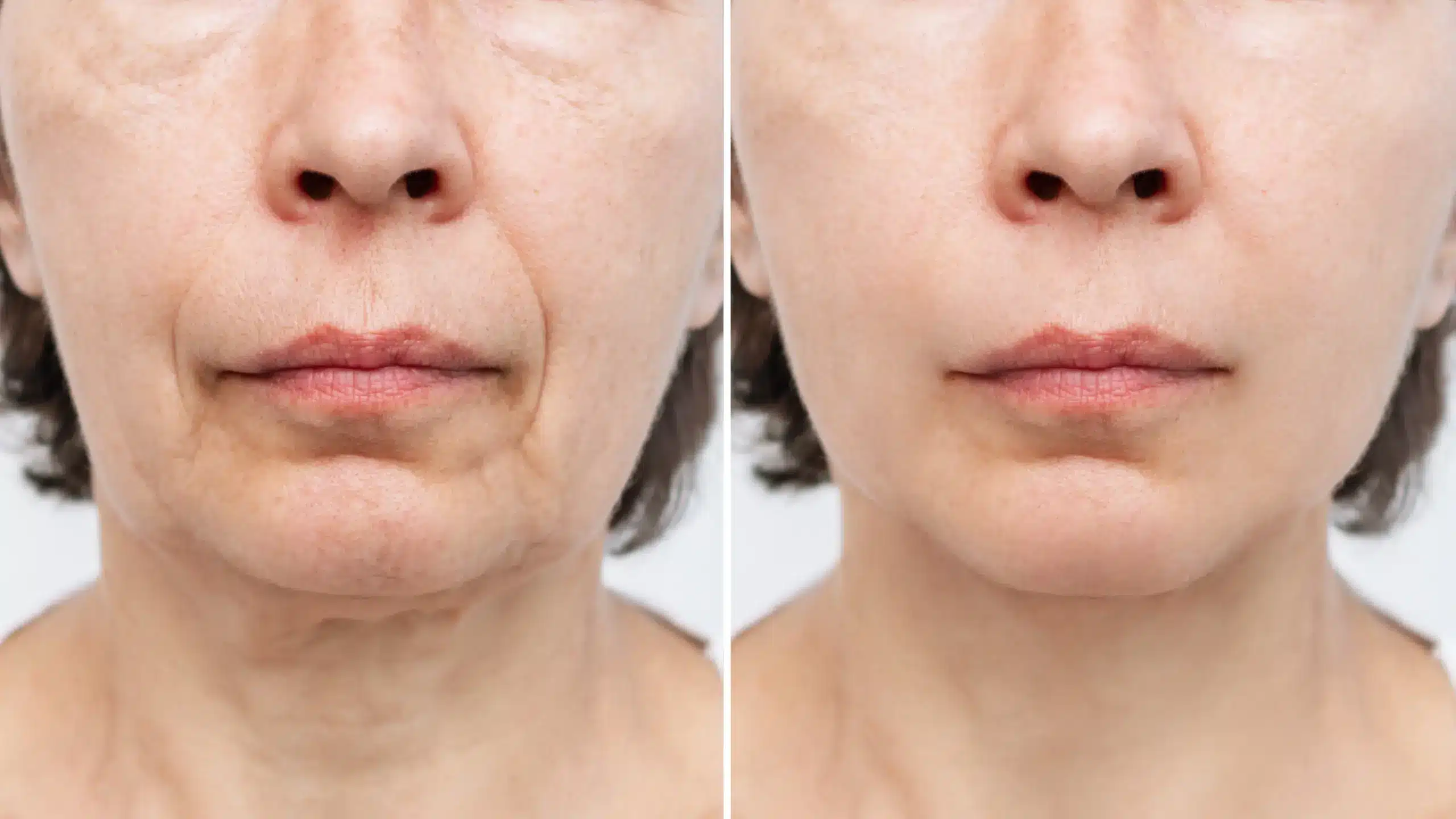
Before-and-After Galleries That Convert (and Rank)
Facelift shoppers linger on galleries longer than almost any other procedure, hunting for the tell-tale signs of an over-pulled result and dismissing any portfolio that shows them. So make comparability the priority: standardized angles and lighting, grouping by technique and age band so a deep-plane candidate in her forties finds cases like hers, and the relevant subset embedded on each technique page instead of quarantined in one mega-gallery. Handled this way it earns its keep twice — as the strongest conversion asset on the site and as a genuine ranking asset, the approach we lay out in how to use before-and-after galleries to improve SEO. Keep every image consented and compliant — see HIPAA-compliant digital marketing for surgeons.
Reviews & Reputation: The Trust Layer
Treat reviews as a system with a trigger, not a favor you occasionally remember to ask for. Prompt at the moment the healed result looks its best, hand the patient a one-tap link, and spread the asks across Google, RealSelf, and Healthgrades so no single profile looks staged. For a change this visible, a short video testimonial beats a paragraph. Reply to everything — a measured response to a hard review reassures the next reader more than a wall of five stars — and fold the whole loop into your plastic surgery branding.
Social, Email & SMS: Staying Present While She Decides
Short-form video is where this audience lives, and it rewards technique explainers and honest, consented reveals far more than promotion. Go deep on one platform rather than spreading thin across three. Underneath, run segmented sequences: a teaching track for early researchers still choosing between deep plane and SMAS, and a warm follow-up for consult no-shows and not-yet-ready patients. The content that powers all of it starts with blogging ideas for cosmetic surgeons.
What to Actually Measure
| Metric | How to read it | The facelift angle |
|---|---|---|
| Cost per lead | Spend ÷ inquiries | Vanity-adjacent — technique tyre-kickers inflate it |
| Cost per consult | Spend ÷ booked consults | Separates real candidates from “just researching” clicks |
| Consult-to-surgery rate | Consults that become procedures | Low here usually means a technique mismatch surfaced in-office |
| Acquisition cost | Total spend ÷ new surgical patients | The only figure that proves the channel mix is paying |
A quick tell: thin consult volume points upstream to paid, SEO, or AI visibility; healthy consults that stall at surgery point in-office — often the technique the patient wanted didn’t match what was recommended. Instrument the whole path with tracking marketing ROI for cosmetic clinics.
Budget & Sequencing
Facelift’s steep click prices mean paid takes the biggest early slice just to keep consults flowing while the slower channels mature. Once the technique cluster, GEO, and review velocity hit their stride — usually around month four to six — acquisition cost falls and spend can shift to the compounding side. Read your own gap to sequence it: quiet pipeline, lead with paid; busy pipeline but weak future footing, pour into the technique cluster and AI search now, while that surface is still open. If deep plane is your signature, give its page and campaign a wider radius, because those patients travel.
What to Stop Doing
Half of the gains in facelift marketing come from stopping things that quietly undermine everything else:
- Stop marketing “a facelift” generically. Patients search by technique. One catch-all page loses to a cluster that names deep plane, SMAS, mini, and neck lift.
- Stop competing with non-surgical on price. Thread-lift and “liquid facelift” bargain messaging attracts the wrong patient and undercuts the credential-led positioning surgery requires.
- Stop hiding the credentials. Board certification and fellowship are a screening criterion for this procedure — put them above the fold, not in a buried bio.
- Stop running ads to your homepage. Every paid click should land on a technique-matched page with one clear action.
- Stop optimizing for cost-per-lead. Judge the account on cost per surgical patient; optimize to cost-per-lead and you’ll just buy more of the wrong traffic.
The Skinspire Take
Facelift is the procedure where the search has moved faster than the marketing. Patients already research by technique and screen by credentials — most practice sites still show them one generic page and a stock photo. The win is simple to state and hard to execute: build the technique cluster, put a real credentialed surgeon at the center of every signal, and answer the technique questions in a form AI can cite. Depth and specificity beat a “plastic surgery package” every time.
“Facelift is the clearest example of search moving to technique. The practice that ranks for ‘deep plane facelift’ and gets quoted by ChatGPT explaining it to a patient is the same practice — built from a real answer, real schema, and a real credentialed surgeon.”Thomas Conroy, SEO & Digital Marketing Lead, Skinspire
“Facelift patients arrive having already learned the vocabulary. If your marketing can’t speak fluently about the technique they came for — and prove the credentials to perform it — you were never really in the running.”Gladys Inting, Founder, Skinspire · 20-year medical aesthetics veteran
The Bottom Line on Facelift Marketing
Treat facelift as its own discipline and it rewards you: a technique-led cluster and an AI-search footprint that meet the patient at “which technique is right for me,” a credential-forward site and a naturalness-proving gallery, paid search that catches ready intent, and reviews and nurture that carry a year-long decision. Execute those with real depth and a board-certified facial plastic surgeon at the center, and you stop competing on price and start being the name the search — and the AI answer above it — hands the patient.
Facelift Marketing: Common Questions.
What is facelift marketing?
Facelift marketing is the system a facial plastic surgeon uses to earn qualified consultations from patients researching facial-rejuvenation surgery: SEO and AI search to be found, a conversion-focused website and before-and-after gallery to build trust, paid search to capture high-intent moments, and reviews plus nurture to convert a considered decision. Because patients now research by technique — deep plane, SMAS, mini — and the result is permanent and highly visible, it’s pull marketing that serves existing demand and leads with surgeon credentials.
What is facelift SEO, and how is it different from general plastic surgery SEO?
Facelift SEO is a technique-led content cluster rather than one broad page. It anchors a primary facelift page with dedicated pages for deep plane facelift, SMAS facelift, mini and mid-facelift, and neck lift, plus cost and recovery pages — because facelift patients increasingly search by technique. It leans harder on MedicalProcedure and FAQ schema and on E-E-A-T tied to a board-certified facial plastic surgeon, since Google treats surgery as a Your-Money-or-Your-Life topic.
How do you market a deep plane facelift?
Deep plane facelift marketing leads with technique credibility and surgeon credentials, because patients specifically seek out surgeons who perform it. Build a dedicated deep plane facelift page, publish honest deep-plane-versus-SMAS comparison content that AI can cite, showcase deep-plane before-and-afters, and foreground board certification and fellowship — the AAFPRS itself urges patients to verify credentials for this procedure. Avoid hype; the audience is sophisticated and researching carefully.
How long does facelift SEO take to produce consultations?
Expect early ranking movement in 60 to 90 days, meaningful organic consult volume at four to six months, and compounding returns from month six onward. Facelift’s considered decision cycle means patients who find a surgeon through in-depth technique and recovery content often convert at higher rates than paid clicks — they arrive better informed and more committed.
What is a realistic facelift marketing budget?
There’s no universal number, but facelift is one of the most expensive paid-search categories in aesthetics — cosmetic cost-per-click commonly runs about $15 to $50 or more. A defensible frame is 5 to 10 percent of target new-patient revenue, weighted toward paid search early for speed and shifted toward SEO, AI search, and reviews over time as those compound and lower blended acquisition cost.
How do you get a facelift practice cited by ChatGPT and Google AI Overviews?
Publish the technique-comparison answers patients ask AI — “deep plane vs SMAS,” “is a mini facelift worth it” — as concise, citation-backed passages on pages with strong entity and E-E-A-T signals. Mark them up with FAQ and MedicalProcedure schema, cite authoritative sources, keep a complete and consistent surgeon entity, and earn independent expert mentions. That’s AIO, AEO, and GEO.
Which is better for a facelift practice, SEO or Google Ads?
Both, in sequence. Google Ads places you at the top within days and fills a pipeline fast, but stops when the budget stops and carries high CPCs for facelift terms. SEO and AI search take months but compound, cost nothing per click once established, and reach patients across a considered research window. The strongest strategy runs paid for immediate consults while SEO and GEO compound underneath.
Should facelift marketing be local or national?
Both, split by technique. General facelift and neck-lift cases are largely local, so local SEO, Google Business Profile, and the Map Pack drive them. Signature techniques like deep plane draw patients who travel across state lines for a specific surgeon, so those pages and campaigns can target a wider radius. Your architecture should reflect this: local intent on the core pages, specialist intent on the technique pages.
Sources & References
- American Society of Plastic Surgeons — 2024 Plastic Surgery Statistics: facelift is the second most-performed facial surgical procedure (behind blepharoplasty) and rose ~1% in 2024. View source
- American Academy of Facial Plastic and Reconstructive Surgery — Member surveys: ~90% of members perform facelifts each year; average member facelift volume up ~60% since 2017; patients trending younger; deep plane and the “Ozempic effect” driving demand. View source
- AAFPRS — “The Rise of the Deep Plane Facelift and Why Credentials Count”: the Academy urges patients to verify board certification and specialist training before choosing a facelift surgeon. View source
- GrowthSRC — Google Organic CTR 2025 Study: AI Overviews appear on approximately 31% of SERPs; sharp decline in #1 organic CTR. View source
- BrightLocal — Local SEO Statistics 2026: the majority of Google local pack clicks go to the top three listings. View source
- Patient10x — Google Ads cost analysis by specialty: cosmetic-surgery cost-per-click commonly ranges from roughly $15 to $50+, with facial procedures among the higher. View source
Stop guessing which channels work. Get a real audit instead.
A free 30-minute audit of your facelift visibility — organic, local, paid, and AI search — plus your competitive set and a prioritized, technique-led roadmap. No sales pressure. Territory-exclusive: we take one practice per protected market.