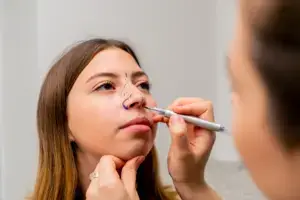

Rhinoplasty marketing is not plastic surgery marketing with the word “nose” swapped in. Rhinoplasty has the longest research cycle in aesthetics — commonly six to eighteen months — the highest trust threshold of any facial procedure, and a patient who has usually decided before they ever find you. That changes everything about how you should be found, and how you should convert.
This playbook covers the full stack that fills a rhinoplasty consult calendar, with a deep section on rhinoplasty SEO and the AI-search layer (AIO, AEO, GEO) most agencies still ignore:
- Be found: rhinoplasty SEO (organic + local) and AI search optimization
- Capture intent: Google Ads & PPC for high-intent, high-CPC searches
- Build trust: a conversion-focused website and a categorized before-and-after gallery
- Convert the wait: reviews, social proof, and email/SMS nurture across a year-long decision
What is rhinoplasty marketing? Rhinoplasty marketing is the system a surgeon uses to earn qualified consultations from patients who are already researching a nose procedure — combining SEO and AI search to be found, a conversion-focused website and before-and-after gallery to build trust, paid search to capture high-intent moments, and reviews plus email/SMS nurture to stay present across a decision that commonly runs six to eighteen months. Because the result sits on the most visible part of a person’s face, effective rhinoplasty marketing is pull marketing: it serves demand that already exists rather than manufacturing it.
Rhinoplasty is the most-requested facial surgical procedure in the United States — and has been for five consecutive years, according to the American Academy of Facial Plastic and Reconstructive Surgery2. The American Society of Plastic Surgeons counted 48,423 cosmetic rhinoplasty procedures in 2024 alone, up 2% year over year1. And the patients driving that demand skew young and digital: roughly 60% of rhinoplasty patients are between 18 and 343 — a cohort that researches surgeons on Google, Instagram, TikTok, RealSelf, and, increasingly, ChatGPT and Google AI Overviews before they ever pick up the phone.
That combination — high demand, a young and research-heavy audience, and a result nobody can hide — makes rhinoplasty simultaneously one of the most lucrative and most unforgiving procedures to market. Spend on the wrong channels or the wrong patients and you end up with a full ad account and an empty consult calendar. This guide is the opposite of that: a rhinoplasty-specific system, in priority order, built to win both the traditional search results and the AI answers that increasingly sit above them.
Why Rhinoplasty Marketing Is Different from Every Other Procedure
Most procedure marketing runs a simple play: show results, list credentials, run ads. Rhinoplasty breaks that play, because the patient behaves differently from nearly every other elective-surgery prospect. Four things set it apart, and they compound.
1. The longest decision cycle in aesthetics
A rhinoplasty patient typically researches for six to eighteen months before booking a consult. They comparison-shop surgeons, save before-and-after photos, watch surgery videos, and read forums long before they submit a form. Your marketing cannot chase a single moment of intent — it has to stay present, credible, and findable across the entire window. That is why SEO, educational content, and email/SMS nurture matter so much more here than in, say, injectables.
2. A result nobody can hide
The outcome sits on the center of the face, visible in every photo and every conversation for the rest of the patient’s life. That raises the trust threshold dramatically. Patients are not just evaluating skill — they are deciding whether they trust you with something permanent and unconcealable. Your before-and-after gallery, your credentials, and your reviews do the heavy lifting that ad copy cannot.
3. Genuine emotional investment
Many candidates carry years of self-consciousness into their research. Clinical, transactional, or “hard-sell” messaging loses them instantly. The tone that converts is calm, honest, and specific — the tone of a surgeon who treats the consultation as a clinical conversation, not a closing.
4. One of the most competitive paid markets in surgery
Because rhinoplasty is the top facial procedure, nearly every facial plastic surgeon competes for the same clicks. Cosmetic-surgery cost-per-click commonly runs $15 to $50 or more, with rhinoplasty near the top of that range6. You are not just buying clicks — you are competing for trust against dozens of surgeons running nearly identical campaigns. Winning requires differentiation the auction can’t buy: proof, specialization, and authority.

The Rhinoplasty Patient Journey (and Where Marketing Plugs In)
A motivated rhinoplasty patient does not pick the first result they see. They assemble a shortlist across months, then apply a fairly consistent mental ranking to choose between the surgeons on it:
- Specialization & credentials — Is this a rhinoplasty specialist, or a generalist who also does noses? Board certification, fellowship training, and case volume matter more here than in almost any other procedure.
- Visible results — Does the portfolio show outcomes this specific patient wants, ideally with cases like theirs (their ethnicity, their concern, revision vs. primary)?
- Detailed reviews & patient stories — Do real patients describe the experience, the honesty, and the result in genuine detail?
- The consultation experience — Did the surgeon listen, explain risks honestly, and discuss whether surgery is even the right call?
- Price — Only once the above are roughly equal, and often not decisive even then.
Map your channels to this journey and the priority order almost writes itself. Discovery and shortlisting happen in search, on social, and increasingly inside AI answers — that is where SEO, GEO, and content live. Trust-building happens on your website and in your reviews. The final nudge happens in the consult and the nurture sequence that gets them there. The sections below follow this order, and every one links up to the matching plastic surgery digital marketing service that executes it.
Rhinoplasty SEO: The Deep Dive
What is rhinoplasty SEO? Rhinoplasty SEO is the practice of optimizing a surgeon’s website and online presence to rank in organic and local search — and to be cited in AI search — for the specific terms rhinoplasty patients use: the procedure and its sub-types (revision, ethnic, functional), cost and recovery questions, and “rhinoplasty surgeon near me” local queries. Unlike broad plastic surgery SEO, it is a tightly built content cluster anchored by a named, credentialed surgeon, engineered for a Your-Money-or-Your-Life topic where Google weights trust signals heavily.
This is the section most surgeons — and most agencies — get wrong. They treat rhinoplasty as one page in a generic “procedures” menu. But rhinoplasty is deep enough to be its own topical universe, and the practices that treat it that way dominate the organic results and the AI answers. Here is the architecture that wins, built the same way we build every plastic surgery SEO engagement.
1. Keyword architecture: cluster, don’t cram
One rhinoplasty page cannot rank for the full range of rhinoplasty intent. Build a hub-and-spoke cluster: a primary rhinoplasty page as the hub, with dedicated spokes for each sub-procedure and intent. Each spoke targets its own keyword set, carries its own subset of before-and-afters, and answers the questions unique to that patient.
| Cluster page | Primary intent | Representative queries |
|---|---|---|
| Rhinoplasty (hub) | Procedure overview / shortlist | rhinoplasty [city], best rhinoplasty surgeon, nose job |
| Revision rhinoplasty | High-value, low price-sensitivity | revision rhinoplasty specialist, botched nose job repair |
| Ethnic rhinoplasty | Anatomy-specific expertise | ethnic rhinoplasty, Asian / African American / Middle Eastern rhinoplasty |
| Functional / septorhinoplasty | Insurance / breathing intent | deviated septum surgery, septoplasty, breathing + cosmetic |
| Cost & financing | Decision-stage research | rhinoplasty cost [city], nose job financing |
| Recovery | Top-of-funnel education | rhinoplasty recovery timeline, what to expect after rhinoplasty |
This structure does three jobs at once: it captures the long-tail volume a single page never could, it demonstrates topical authority to Google, and it gives AI systems clean, specific passages to lift. For the fuller method, see our guide on how to rank for cosmetic surgery procedures in 2026 and the aesthetic playbook for treatment pages that rank locally.
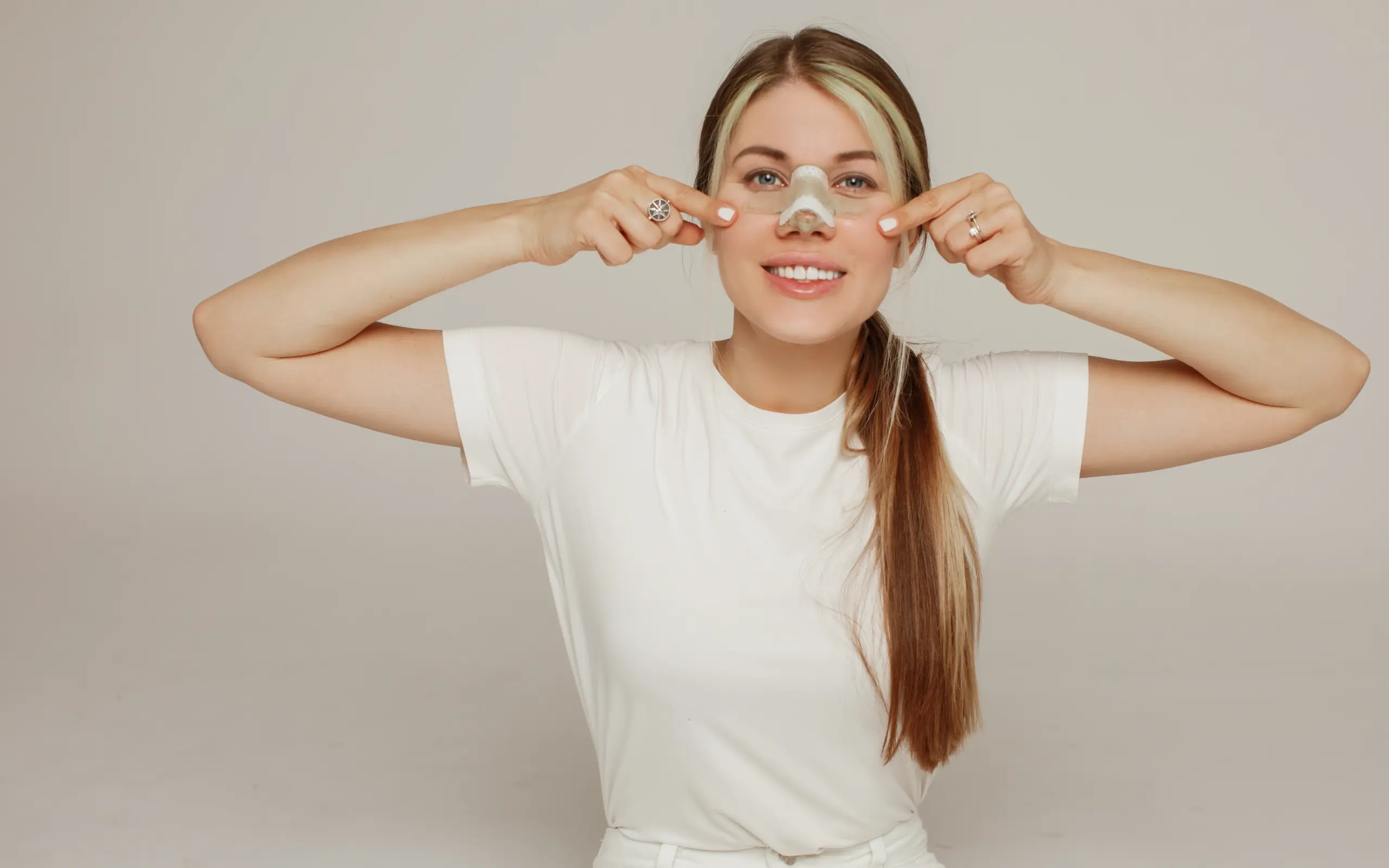
2. Technical SEO & schema: the part AI actually reads
Rhinoplasty is a Your-Money-or-Your-Life (YMYL) medical topic, so the technical floor is higher than for a restaurant or a gym. Non-negotiables:
- Core Web Vitals & mobile-first — sub-three-second loads and clean mobile layout; most rhinoplasty research happens on phones. See Core Web Vitals for medical websites.
- MedicalProcedure, FAQPage & MedicalWebPage schema — tells search and AI engines exactly what each page is, and makes your answers eligible to be lifted. Our deep-dive on schema markup for plastic surgery clinics covers the full graph.
- ImageObject schema on the gallery — every before-and-after gets descriptive alt text and structured data, feeding both image search and AI multimodal results.
- Physician / Person schema tied to the surgeon — the entity signal that anchors E-E-A-T (below).
3. Local SEO & the Map Pack
Primary cosmetic rhinoplasty is largely local — patients start with “rhinoplasty surgeon near me,” and the Google Map Pack sits above the organic results, where the majority of local clicks go to the top three listings5. Winning it takes a fully built Google Business Profile (services, real photos, weekly posts, seeded Q&A), consistent citations, and steady review velocity. Our Google Maps ranking factors guide breaks down the signals that move it.
4. E-E-A-T: why the surgeon’s name is a ranking factor
For a Your-Money-or-Your-Life topic like surgery, Google leans hard on Experience, Expertise, Authoritativeness, and Trustworthiness. A page attributed to a named, credentialed surgeon — with board certification, fellowship training, case volume, publications, and a consistent entity across the site and third-party profiles (RealSelf, Healthgrades, hospital and society pages) — will out-rank an anonymous page every time. It is also the single biggest lever for being cited by AI, which preferentially quotes sources with a clear, verifiable expert behind them.
The surgeon page: your entity anchor
Every practice needs one canonical, richly built surgeon page — the bio/about page — carrying the full record: board certifications, fellowship, hospital affiliations, society memberships, publications and talks, case volume, and outbound links to the surgeon’s third-party profiles. Marked up with Physician / Person schema and referenced by @id across the site, this page becomes the entity hub that Google and AI resolve every other mention back to. If it’s thin, nothing else you do on E-E-A-T fully lands.
The mini-E-E-A-T card: reinforce it on every page
Here is the practice most sites miss, and a standard on every medical page we build: the expert signal cannot live only on the About page. Every procedure page, every treatment page, and every clinical blog post should close with a compact mini-E-E-A-T card — a small block at the bottom that attributes the content to the named surgeon, states their headline credentials, and links back to the full bio. It turns a single strong entity page into a signal that repeats across every URL a patient — or an AI crawler — lands on. A good one carries:
- The surgeon’s name and headline credentials (MD, FACS, board certification, fellowship)
- A one-line specialization plus a case-volume or years-in-practice signal
- A “Written by” or “Medically reviewed by” attribution with a last-reviewed date
- Links to the full surgeon bio and to verifiable third-party profiles (RealSelf, Healthgrades, hospital page)
Dr. [Surgeon Name], MD, FACS
Board-certified facial plastic surgeon · Fellowship-trained in rhinoplasty · 1,200+ nasal procedures performed
Full bio · RealSelf · Healthgrades · Last reviewed Aug 2026
Done consistently, the mini-E-E-A-T card is quietly one of the highest-leverage moves in medical SEO: it de-anonymizes every page, keeps the surgeon entity consistent site-wide, gives AI a verifiable author to attach the answer to, and signals the “reviewed by a real clinician” trust that YMYL content is judged on. Build the pattern once, template it, and apply it everywhere — the full method is in our guide on building E-E-A-T for plastic surgery websites.
Put together, this is what separates a rhinoplasty page that collects impressions from one that produces consultations — the exact gap we close in our SEO for plastic surgeons work.
See how Skinspire builds rhinoplasty SEO →AI Search Optimization for Rhinoplasty: AIO, AEO & GEO
How do you get a rhinoplasty practice recommended by AI? You earn it by giving AI systems clean, citation-backed answers on pages with strong entity and trust signals. In practice: open every page and section with a direct answer, mark content up with FAQ and MedicalProcedure schema, cite authoritative sources, keep the surgeon’s entity complete and consistent across the web, and earn mentions on independent “best of” lists. This is the layer most rhinoplasty agencies still ignore — which is exactly why it is winnable now.
Search is splitting into two surfaces: the classic blue links, and the AI answer sitting above them. AI Overviews now appear on roughly 31% of Google results and are growing fast, while the click-through rate to the #1 organic result has fallen sharply as those answers absorb the click4. Meanwhile, a large and growing share of younger patients — rhinoplasty’s core demographic — asks ChatGPT, Perplexity, and Gemini for surgeon recommendations directly. If your practice is not structured to be cited, you are invisible on the fastest-growing surface in search.
The discipline splits into three overlapping practices:
- AIO (AI Optimization) — earning citation inside Google AI Overviews.
- AEO (Answer Engine Optimization) — being selected as the answer inside ChatGPT, Perplexity, Gemini, and Claude.
- GEO (Generative Engine Optimization) — the broader craft of structuring your whole presence for AI-first discovery.
What actually earns citations for a rhinoplasty practice: direct-answer blocks AI can lift cleanly (the answer chips throughout this page are built exactly for this), FAQ and MedicalProcedure schema, claims backed by named authoritative sources, a complete and consistent surgeon entity, and presence on third-party expert lists. Our companion guides go deeper — Generative Engine Optimization (GEO) for cosmetic practices and how to future-proof your SEO with generative AI.
Why this is the whole game in 2026
Traditional SEO and AI search are no longer two projects — they are one. The same structural moves that make a rhinoplasty page rank (clean answers, schema, citations, a credentialed surgeon entity) are the moves that make it quotable by AI. Build for both at once, or you’ll lose the top of the funnel to the surgeon who did.
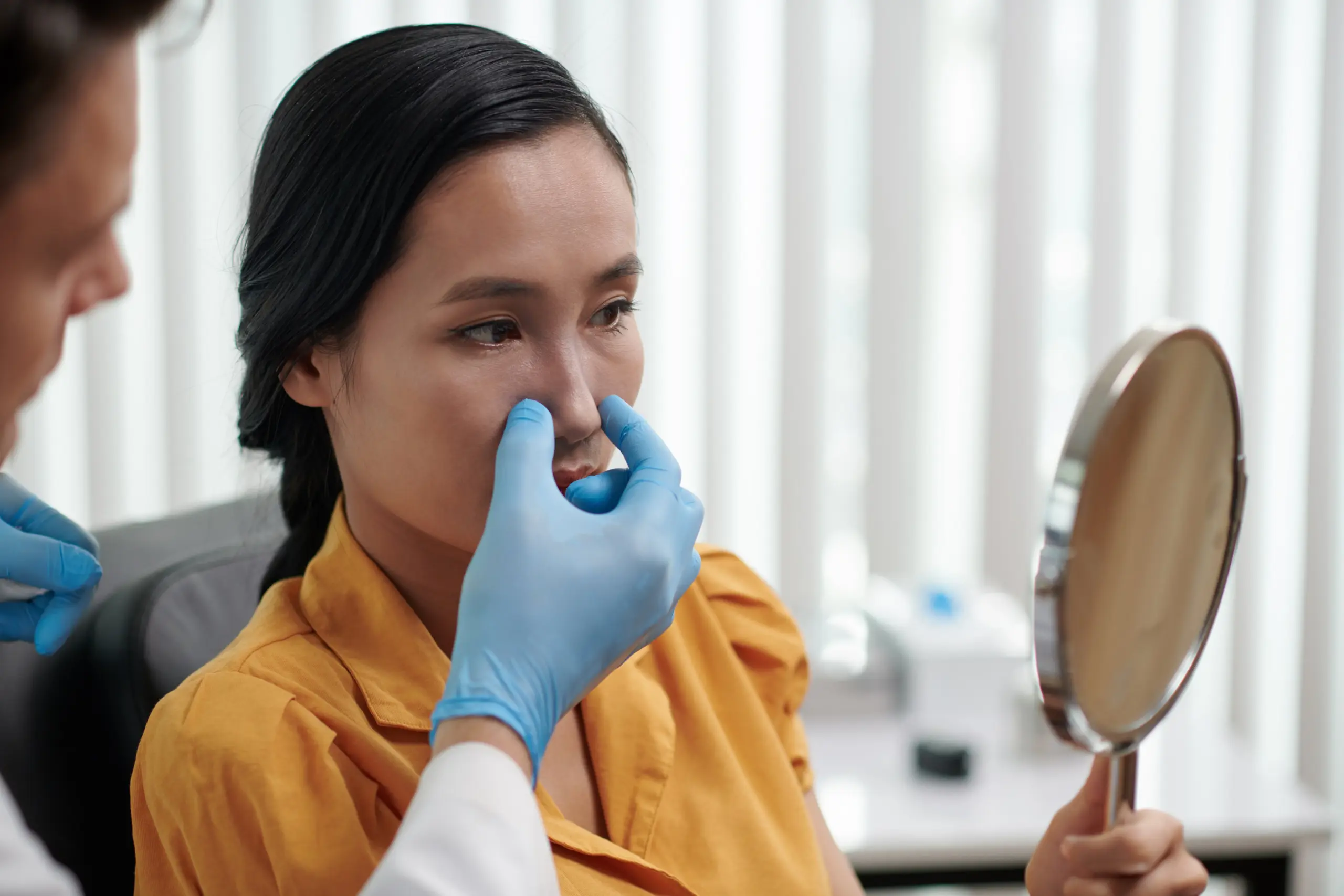
Google Ads & PPC for High-Intent Rhinoplasty Searches
A patient searching “best rhinoplasty surgeon near me” is ready to act. Paid search intercepts them at that moment. But rhinoplasty is one of the priciest auctions in medicine, so discipline is everything:
- Tightly themed ad groups — separate campaigns for primary, revision, ethnic, and functional intent, each with matched landing pages (never the homepage).
- Aggressive negative keywords — filter out “at-home,” “non-surgical,” “training,” “jobs,” and price-shoppers who won’t convert to surgery.
- Radius, not metro, targeting — with a wider radius reserved for revision and ethnic sub-specialty campaigns, where patients travel.
- Conversion tracking to booked consults — not form fills. Cost-per-lead lies; cost-per-consult and cost-per-surgical-patient tell the truth.
- Meta for revision & ethnic audiences — lookalikes built from past consult conversions reach new patients who mirror your best cases.
The paid-versus-organic tradeoff is worth understanding in full before you allocate budget — our breakdown of SEO vs. paid search for plastic surgery clinics lays it out, and our plastic surgery PPC & lead generation team runs it.
The Conversion-Focused Rhinoplasty Website
Every other channel sends patients to your website first — so a slow, generic, or thin site quietly wastes the entire budget above it. Board certification, fellowship training, hospital affiliations, and media features belong above the fold, not buried in a bio. The tone should speak to an intelligent adult making a considered decision: inform, don’t persuade. And the path from “impressed” to “consult booked” should be one obvious step. Our conversion team covers the mechanics in how to write treatment pages that convert and how to turn web traffic into booked consultations; when the build itself is the gap, that’s plastic surgery website design.
Before-and-After Galleries That Convert (and Rank)
Patients don’t skim a rhinoplasty gallery; they study it. Make it work as hard as it can: standardize the photography so results are comparable, organize by case category so a revision or ethnic-rhinoplasty patient can find cases like theirs, and embed the relevant subset directly on each procedure page rather than isolating it where patients rarely look. Done right, the gallery is simultaneously your best conversion tool and a genuine SEO asset — the dual-purpose approach we detail in how to use before-and-after galleries to improve SEO. Throughout, keep it compliant — see HIPAA-compliant digital marketing for surgeons.

Reviews & Reputation: The Trust Layer
Build a structured system, not an occasional ask: request reviews at the right post-procedure moment (once the patient is happy with their result), send a direct link to remove friction, and distribute across Google, RealSelf, Healthgrades, and your own site. Video testimonials carry disproportionate weight for a procedure this visible. Respond to every review — including critical ones — professionally; handled well, a thoughtful response to a negative review becomes a trust signal for the next reader. The broader systems live in our plastic surgery branding work.
Social, Email & SMS: Converting the Long Wait
Because the rhinoplasty decision spans months, presence over time beats any single touch. On social, lead with results (with consent) and education, not discounts — and master one platform rather than maintaining three at mediocrity. Behind it, segmented email and SMS sequences keep your practice visible: an educational nurture for early-stage researchers, a revision-specific track for that more cautious audience, and post-consult follow-ups for the patients who booked but haven’t yet decided. For the content engine that feeds all of this, see blogging ideas for cosmetic surgeons.
What to Actually Measure
| Metric | What it measures | Why it matters for rhinoplasty |
|---|---|---|
| Cost per lead | Spend ÷ total inquiries | Efficiency of top-of-funnel — but easy to game |
| Cost per consult | Spend ÷ booked consults | Reveals lead quality, not just quantity |
| Consult-to-surgery rate | % of consults that convert | Exposes whether the gap is marketing or the in-office experience |
| Patient acquisition cost | Total spend ÷ new surgical patients | The only number that truly measures ROI |
One honest diagnostic: if consult volume is low, the fix is upstream (paid, SEO, AI search). If consults are plentiful but few convert to surgery, no ad budget will help — the issue is the consultation and follow-up process. Our guide to tracking marketing ROI for cosmetic clinics shows how to instrument all of it.
Budget & Sequencing
Rhinoplasty’s high CPCs mean paid search will demand the largest early share, simply to fill the pipeline while slower channels build. As SEO, GEO, and review velocity mature — usually from month four to six — blended cost per acquisition falls, and budget can rotate toward the compounding channels. Sequence by where your gap is: low consult volume → lead with paid; strong volume but weak visibility for the future → invest in SEO and AI search now, before the AI-answer surface consolidates around whoever got there first.
What to Stop Doing
Half of the gains in rhinoplasty marketing come from stopping things that quietly undermine everything else:
- Stop manufacturing insecurity. Marketing that implies a patient’s natural nose is a “problem” attracts poorly motivated patients with unrealistic expectations, higher regret, and worse reviews. Rhinoplasty marketing is pull, not push — serve the patient who already decided, never invent one.
- Stop bundling rhinoplasty into a generic plastic-surgery package. Rhinoplasty patients behave differently; a page and campaign that don’t reflect that lose to ones that do.
- Stop leading with discounts. Promotional pricing trains for deal-seekers and erodes perceived expertise — the opposite of what a permanent facial procedure requires.
- Stop running ads to your homepage. Every paid click should land on a procedure-matched page with one clear action.
- Stop optimizing for cost-per-lead. Optimize for cost-per-surgical-patient, or you’ll scale the wrong traffic.
The Skinspire Take
Most rhinoplasty practices don’t lose because they’re missing a channel — they lose because they run all of them shallowly and none of them as a rhinoplasty strategy. Pick the two that match your gap (almost always rhinoplasty SEO plus one fast channel), execute them to a genuine depth, then layer the AI-search work on top while the surface is still winnable. Depth beats breadth, and specificity beats a “plastic surgery package” every time.
“Rhinoplasty is the clearest case in aesthetics where traditional SEO and AI search are the same project. The page that ranks and the page that gets quoted by ChatGPT are built from the identical parts — a real answer, real schema, and a real surgeon behind it.”Thomas Conroy, SEO & Digital Marketing Lead, Skinspire
“The rhinoplasty patients worth having spend a year deciding. If your marketing only shows up at the moment of the ad click, you were never in the running — the surgeon they trusted earned that trust months earlier, in content and reviews.”Gladys Inting, Founder, Skinspire · 20-year medical aesthetics veteran
The Bottom Line on Rhinoplasty Marketing
Rhinoplasty rewards the practices that treat it as its own discipline: a deep SEO cluster and an AI-search presence to be found across a year-long decision, a website and gallery built to earn trust in a permanent, visible result, disciplined paid search to capture intent, and reviews plus nurture to convert the wait. Do those with genuine depth — and with a named, credentialed surgeon at the center of every signal — and you don’t just rank. You become the answer, on the blue links and in the AI results that increasingly sit above them.
Rhinoplasty Marketing: Common Questions.
What is rhinoplasty marketing?
Rhinoplasty marketing is the system a surgeon uses to earn qualified consultations from patients already researching the procedure: SEO and AI search to be found, a conversion-focused website and before-and-after gallery to build trust, paid search to capture high-intent moments, and reviews plus email/SMS nurture to stay present across a decision that commonly runs six to eighteen months. Because the result sits on the most visible part of the face, it is pull marketing — serving existing demand rather than manufacturing it.
How is rhinoplasty SEO different from general plastic surgery SEO?
Rhinoplasty SEO is narrower and deeper. Instead of one broad procedure page, it builds a cluster: a primary rhinoplasty hub plus dedicated pages for revision, ethnic, and functional rhinoplasty, each with its own keywords, its own before-and-after subset, and its own patient questions. It leans harder on MedicalProcedure and FAQ schema, on E-E-A-T signals tied to a named surgeon, and on cost and question content — because rhinoplasty patients research for months before booking.
How long does rhinoplasty SEO take to produce consultations?
Expect early ranking movement in 60 to 90 days, meaningful organic consult volume at four to six months, and compounding returns from month six onward. Because the decision cycle is so long, patients who find you through in-depth content often convert at higher rates than paid clicks — they arrive better researched and more committed.
What is a realistic rhinoplasty marketing budget?
There’s no universal number, but rhinoplasty is one of the most expensive paid-search categories in aesthetics — cosmetic cost-per-click commonly runs about $15 to $50 or more. A defensible frame is 5 to 10 percent of target new-patient revenue, weighted toward paid search early for speed and shifted toward SEO, AI search, and reviews over time as those compound and lower blended acquisition cost.
How do you market revision rhinoplasty?
Revision candidates usually arrive after a disappointing prior result, so they’re more cautious, more research-intensive, and far less price-sensitive. Lead with sub-specialty expertise, revision-specific before-and-afters, and honest discussion of complexity and realistic outcomes — never promotional offers. A dedicated revision rhinoplasty page and revision-focused content outperform generic rhinoplasty pages for this audience.
How do you get a rhinoplasty practice cited by ChatGPT and Google AI Overviews?
AI systems preferentially lift concise, well-structured, citation-backed answers from pages with strong entity and E-E-A-T signals. Practically: open each page and section with a direct answer, use FAQ and MedicalProcedure schema, cite authoritative sources, keep a complete and consistent surgeon entity across your site and third-party profiles, and earn mentions on independent expert lists. That’s AIO, AEO, and GEO — where rhinoplasty marketing is being won and lost in 2026.
Which is better for rhinoplasty, SEO or Google Ads?
Both, in sequence. Google Ads places you at the top within days and fills a pipeline fast, but stops when the budget stops and carries high CPCs for rhinoplasty terms. SEO and AI search take months but compound, cost nothing per click once established, and reach patients across the long research window. The strongest strategy runs paid for immediate consults while SEO and GEO compound underneath.
Should rhinoplasty marketing be local or national?
Both, split by case type. Primary cosmetic cases are largely local, so local SEO, Google Business Profile, and the Map Pack drive them. Sub-specialty work — revision and ethnic rhinoplasty — draws patients who travel across state lines for the right surgeon, so those pages and campaigns can target a wider radius. Your architecture should reflect this: local intent on the core pages, specialist intent on the sub-procedure pages.
Sources & References
- American Society of Plastic Surgeons — 2024 Plastic Surgery Statistics: 48,423 cosmetic rhinoplasty procedures, up 2% year over year. View source
- American Academy of Facial Plastic and Reconstructive Surgery — 2024 Annual Trends Survey: rhinoplasty the most-requested facial surgical procedure five years running; ~80% of members report >10% of rhinoplasty seekers want revisions. View source
- ISAPS Global Survey 2024 — 60.1% of rhinoplasty procedures performed on patients aged 18–34; rhinoplasty the most common procedure for patients 17 and under. View source
- GrowthSRC — Google Organic CTR 2025 Study: AI Overviews appear on approximately 31% of SERPs; sharp decline in #1 organic CTR. View source
- BrightLocal — Local SEO Statistics 2026: the majority of Google local pack clicks go to the top three listings. View source
- Patient10x — Google Ads cost analysis by specialty: cosmetic-surgery cost-per-click commonly ranges from roughly $15 to $50+, with rhinoplasty among the highest. View source
- StatPearls / NCBI Bookshelf (NIH) — Rhinoplasty: among the most commonly performed plastic surgery procedures in the U.S.; anatomical and technical complexity, especially in revision cases. View source
Stop guessing which channels work. Get a real audit instead.
A free 30-minute audit of your rhinoplasty visibility — organic, local, paid, and AI search — plus your competitive set and a prioritized roadmap. No sales pressure. Territory-exclusive: we take one practice per protected market.