
Jump to Section
Men's Aesthetic Clinic SEO Tampa — Built for Brotox, Hair Restoration, V-Taper Body Sculpting, and the Tampa Demographic Nobody Else Is Targeting.
We're Tampa Bay locals — not a national agency that just discovered men's aesthetic and stamped a "Tampa" tag on a generic men's-services template.
Men's aesthetic clinic SEO in Tampa is the newest specialty at Skinspire — and we're the first agency in Tampa Bay to operate it as a dedicated vertical with its own methodology. The male search audience is growing roughly 30% faster than the broader medspa market, and Tampa practices that capture it now will compound for 18–24 months before the rest of the industry catches up.
Skinspire is the first Tampa SEO agency to operate a dedicated men's aesthetic methodology, separate from our medical spa, plastic surgery, dermatology, and wellness clinic verticals. We help Tampa men's aesthetic clinics, male medical spas, hair restoration practices, men's body sculpting clinics, and male-focused cosmetic medicine practices across South Tampa, Hyde Park, SoHo, Channelside, Westshore, the MacDill corridor, New Tampa, Wesley Chapel, and Hillsborough, Pinellas, and Pasco counties rank for the male-specific search audience that Tampa medspas — currently doing 20-40% male volume but marketed as gender-neutral — are leaving on the table.
All of it built around the male anatomical, demographic, and search-behavior reality that gender-neutral medspa content is not built for: Brotox dosing 2–3× higher than female protocols, a hair restoration cluster (FUE, FUT, PRP, exosomes, beard transplants) much heavier than women's practices, V-Taper body sculpting (Emsculpt, HD lipo, gynecomastia treatment) targeting different anatomy, and the cultural moments specific to Tampa men — MacDill AFB and SOCOM, Hyde Park nightlife, Bucs/Lightning/Rays organizational culture, Tampa cruise port pre-vacation prep, Gasparilla, and Tampa's LGBTQ+ community concentration in Hyde Park, SoHo, and Ybor.
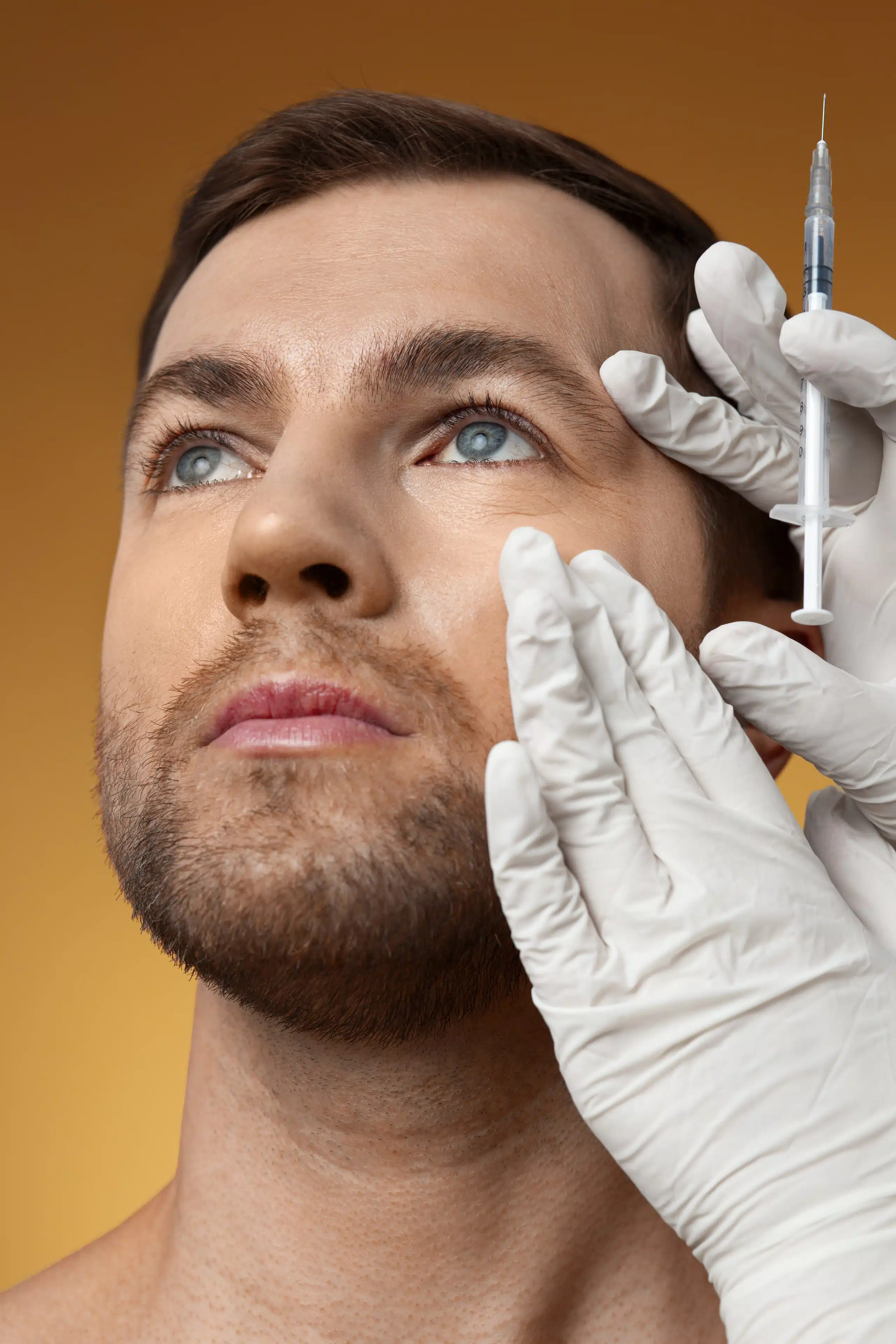
The men's aesthetic search audience in Tampa is growing fast — and your current marketing probably isn't built to capture it. Most Tampa medspas already see 20–40% male patient volume, but their websites, content, photography, conversion forms, and Google Business Profiles are all built for the female aesthetic patient. Skinspire built our men's aesthetic SEO practice as a separate specialty to close that gap — and to help Tampa practices claim category authority in the male search market while the window is wide open.
Skinspire is the first Tampa SEO agency to publish a comprehensive men's aesthetic playbook. It's a fifth core vertical alongside our medical spa, plastic surgery, dermatology, and wellness clinic verticals — with its own methodology because the male patient research pattern, conversion architecture, anatomical protocol depth, and Tampa demographic anchors are genuinely different. One men's aesthetic practice per 20-mile territory. Transparent pricing.
Men's aesthetic clinic SEO in Tampa is the practice of optimizing a Tampa Bay men's aesthetic clinic, male medical spa, hair restoration practice, men's body sculpting clinic, or male-focused cosmetic medicine practice's website, Google Business Profile, service-line content, provider authority pages, and stealth-research conversion architecture so Tampa men find that practice when researching male-specific cosmetic treatments — typically late at night, on mobile, in privacy mode, often through AI search engines (ChatGPT, Perplexity, Google AI Overviews) before they ever land on Google.
It combines male-specific service-line content (Brotox dosing and male facial anatomy, hair restoration depth, V-Taper body sculpting, gynecomastia, sexual wellness, jawline architecture, neck and chin work), stigma-aware content strategy that acknowledges the male research pattern without amplifying social pressure, provider E-E-A-T markup (Experience, Expertise, Authoritativeness, Trustworthiness — Google's framework for evaluating content quality, especially in health categories) surfacing ISHRS, AAFE, A4M ABAARM/ABAAHP, AACS, and ABPS credentials, Tampa demographic targeting (MacDill AFB and SOCOM, Hyde Park and SoHo professional class, Bucs/Lightning/Rays, cruise port, Gasparilla, LGBTQ+ community), SMS-preferred conversion architecture, transparent first-visit pricing, and privacy-mode-friendly analytics that don't accidentally identify male patients to third parties.
Unlike medical spa SEO (built for female aesthetic patients), plastic surgery SEO (built for surgical consultation journeys), dermatology SEO (built for dual-vertical insurance and cosmetic), or wellness clinic SEO (built for cash-pay membership economics), men's aesthetic SEO operates on a fundamentally different patient research pattern, conversion psychology, and service-line emphasis.
If you operate a Tampa men's aesthetic practice — or you operate a medspa, plastic surgery, dermatology, or wellness clinic with significant male patient volume that you've never marketed to specifically — you've probably seen the pattern: your male patients tell you they researched for weeks before booking, found your practice through a private-mode search or an AI engine, and only converted because they happened to read a single specific paragraph that addressed their actual concern. Meanwhile, a small handful of Tampa practices have started publishing genuinely male-focused content — Bespoke Rx in South Tampa explicitly positions as "leaders in male aesthetic treatments," Formation Med has built out a dedicated men's aesthetic surgery section, and a few others have begun publishing Brotox and male injectable content one page at a time. None of them have a comprehensive agency-led men's aesthetic SEO strategy. The first practice that does — and that's positioned as the men's-aesthetic specialist in their submarket — captures category-defining authority while the window is open.
What follows is exactly how Tampa men's aesthetic SEO is structurally different from medical spa SEO, plastic surgery SEO, dermatology SEO, and wellness clinic SEO — and why first-mover content authority published in 2026 will define which Tampa men's aesthetic practice owns the category by 2028. Built around the male-specific anatomical and protocol reality, the Tampa demographic anchors that no out-of-state agency knows to target, the stealth-research male patient research pattern, and the AI search citation arbitrage available right now while the men's aesthetic content corpus is thin.
"I've watched dozens of Tampa medspas, plastic surgery offices, and wellness practices try to capture male patient volume by adding a 'For Men' page to a women-focused website. It almost never works. Male patients can tell when content was written for someone else and gendered after the fact — they bounce, they pattern-match the practice as not-for-them, they go private-mode and ask ChatGPT for an alternative. The practices that actually capture male volume in Tampa do it by building genuinely male-specific service architecture, photography, language, and conversion paths from the foundation up. There's a real first-mover window here, and it closes when the rest of the industry catches up."Gladys Inting, Founder, Skinspire · 20-year medical aesthetics industry veteran
Skinspire is the first agency in Tampa Bay to operate men's aesthetic SEO as a dedicated specialty — built for practices ready to own this category before everyone else figures out it exists.

If you operate a men's aesthetic practice in Tampa Bay — or you operate a medspa, plastic surgery office, or wellness clinic doing serious male volume that you've never marketed to specifically — you've felt the structural frustration of working with marketing agencies that treat male patients as a footnote. The "For Men" page tacked onto a women-focused website. The gender-neutral injectables content that doesn't mention Brotox dosing differences. The Google Business Profile photography that quietly tells male prospects this practice isn't built for them.
Skinspire built its men's aesthetic SEO practice as a separate vertical specifically because that gap is real. Alongside our medical spa, plastic surgery, dermatology, and wellness verticals, men's aesthetic now operates as a fifth specialty with its own methodology, its own keyword research framework, its own conversion architecture, and its own demographic-targeting playbook for Tampa Bay. Not a retrofit. Not an add-on. A genuine specialty practice for Tampa practice owners who recognize the male demographic deserves the same dedicated marketing attention the female aesthetic patient has had for the last fifteen years.
The American Society of Plastic Surgeons reports that male cosmetic procedure volume has grown roughly 30% over the last five years, with the under-35 male demographic representing the fastest-growing segment of cosmetic medicine nationally. Tampa indexes higher than the national average on every metric that drives male aesthetic demand: a concentrated military and special operations veteran demographic at MacDill AFB, an affluent professional class clustered in South Tampa and Westshore, the Bucs/Lightning/Rays organizational culture creating athlete-adjacent body composition demand, the Tampa cruise port driving pre-vacation aesthetic prep, the annual Gasparilla cultural moment, and Tampa's significant LGBTQ+ community concentration in Hyde Park, SoHo, and Ybor.
The window for Tampa practices to claim category authority — to own "Brotox Tampa," "men's hair restoration Tampa," "V-Taper body sculpting Tampa," "MacDill men's aesthetic," and the broader male-specific Tampa keyword set — is open right now. Twelve months from now it will be narrower. Twenty-four months from now competitive entry will have hardened the SERPs around whichever practices moved first. Skinspire is built to help your practice be one of those movers.
The five demographic anchors that make Tampa men's aesthetic uniquely high-leverage
Tampa Bay has roughly 3.2 million residents across Hillsborough, Pinellas, Pasco, Manatee, and Hernando counties — but the men's aesthetic search demand is concentrated in five demographic anchors that don't exist with the same density in any other Florida metro.
- The MacDill AFB / SOCOM / CENTCOM corridor. MacDill Air Force Base houses U.S. Central Command and U.S. Special Operations Command — the operational headquarters for the country's most demanding military communities. The active-duty, retired, and special operations veteran demographic concentrated in South Tampa drives disproportionate demand for body composition optimization (TRT-adjacent, performance medicine), hair restoration (chronic stress-related hair loss is meaningfully higher in special operations populations), aesthetic recovery from deployment-related skin damage, and post-military career-repositioning aesthetic work. Many of these patients have TRICARE primary care but pay cash for specialty aesthetic services TRICARE doesn't cover. Search queries like "men's aesthetic clinic near MacDill," "veteran hair restoration Tampa," "SOCOM body composition Tampa," "post-deployment aesthetic Tampa," and "Brotox MacDill" exist in measurable volume — and almost no Tampa men's aesthetic practice targets them explicitly.
- The Hyde Park / SoHo / Channelside professional and nightlife class. Tampa's most concentrated affluent young-and-mid-career male demographic clusters in Hyde Park, SoHo (South Howard Avenue), Channelside, and Davis Islands — finance professionals, attorneys, executives, real estate developers, restaurant and hospitality operators, and the Tampa nightlife scene that surrounds Hyde Park Village and SoHo's restaurant corridor. This demographic drives demand for Brotox (preventive and corrective), jawline filler, hair restoration (especially the under-40 hairline-management market), V-Taper body sculpting for the dating market, and the broader "look 5 years younger without looking like you're trying" aesthetic that defines current male cosmetic preferences.
- The Tampa professional sports and athlete-adjacent demographic. Tampa Bay Buccaneers, Tampa Bay Lightning, and Tampa Bay Rays organizations — players, front-office staff, and the broader athlete-adjacent ecosystem of trainers, agents, and former athletes who remain in Tampa post-career — drive measurable demand for body composition work (HD lipo for residual abdominal fat after retirement, gynecomastia treatment, performance medicine including TRT and peptide protocols), aesthetic recovery from career-related skin and joint damage, and discreet cosmetic work appropriate to public-facing roles. The competitive set targeting this demographic specifically is effectively zero.
- Tampa cruise port pre-vacation aesthetic preparation. Port Tampa Bay is the largest cruise port on Florida's Gulf coast, with roughly one million cruise passengers annually. The pre-cruise male aesthetic prep market — body sculpting prep 6-12 weeks ahead of departure, hair restoration consultation timed for cruise vacation downtime, and the specific anxiety around being shirtless on a pool deck for seven days — drives a seasonal search pattern that builds October through March. A Tampa men's aesthetic practice with explicit pre-cruise content positioning captures this demand entirely uncontested.
- The Gasparilla cultural moment. Tampa's annual Gasparilla pirate festival (late January) is the most distinctive cultural event in Tampa's calendar — and it drives a measurable Q4-to-January aesthetic preparation pattern that's specific to Tampa. Men preparing for Gasparilla parade participation, krewe events, and the broader social calendar around Gasparilla weekend create a seasonal aesthetic demand pulse that no out-of-state agency would think to target. Content seeded in October for January conversion drives the strongest results in this demographic.
Layered on top of these five anchors is Tampa's significant LGBTQ+ community concentration in Hyde Park, SoHo, and Ybor — driving distinct aesthetic preferences and a particular openness to dedicated men's aesthetic positioning that broader markets often lack. Plus the Tampa snowbird population (November–April) bringing male patients from the Northeast and Midwest who either had aesthetic work interrupted by relocation or are seeking a Tampa practice for their winter months.
What "real" men's aesthetic SEO looks like vs. "for men" content slapped on a women's website
Most Tampa medspas, plastic surgery offices, and dermatology practices already have something on their site for male patients. A "Botox for Men" page where the dosing guidance is identical to the women's page. A "Men's Services" tab that's just the women's treatment menu with the pronouns swapped. A handful of male testimonials buried under three rows of female before-and-afters. If that describes your current setup, here's the uncomfortable reality: Google can tell. AI engines can tell. And the male prospect who lands on your site can tell within about eight seconds.
That's the difference between gendered content and a genuine men's aesthetic SEO architecture. The first is a paint job. The second is the foundation rebuilt around male anatomy, male research patterns, male conversion psychology, and Tampa's specific male demographic anchors. Skinspire is the first agency in Tampa Bay to operate that as a separate specialty — not because we noticed an empty competitive set and rushed to fill it, but because we kept watching Tampa practices get male volume despite their marketing rather than because of it, and we built the methodology that would actually capture what was being left on the table.
How low is the bar right now? Run a search for "men's botox tampa" today and look at what ranks on the first page. We've audited the current top 10 results across men's-specific Tampa queries, and the pattern is consistent: a "Botox for Men" page using a stock photo of a woman in the hero banner. Body copy set in light blue text against a dark blue background that's nearly unreadable on most screens. A "Men's Wellness" page that's literally one section about hormone therapy with the rest of the page filled with stuffed keyword lists. A "Treatments for Men" page with three short paragraphs and an upsell. Generic "men have bigger muscles so they need more units" filler that could have been written for any practice in any city. Nearly none of these pages publish Tampa-specific content, transparent pricing, named providers with surfaced credentialing, male-specific dosing depth, or demographic targeting. Several of them aren't even located in Tampa — they rank for Tampa queries from Orlando, Lakewood Ranch, and St. Petersburg addresses. And yet they rank — not because they earned the position, but because the competitive set is genuinely that thin.
This is what we mean when we say the Tampa men's aesthetic vertical is genuinely uncontested at the SEO level. The Tampa practice that publishes substantive men's-specific content depth, real male photography, transparent pricing, named-provider credentialing, and demographic-targeted authority pages in 2026 doesn't have to fight through entrenched authority. It has to clear a bar that's currently sitting on the floor. And the practice that opens as a dedicated men's aesthetic clinic in Tampa Bay — fully positioned, fully built around the male demographic, fully supported by a real men's aesthetic SEO architecture — has the kind of category-defining opportunity that doesn't exist in any other Tampa healthcare vertical right now.
Where your practice fits in the existing Tampa men's aesthetic ecosystem
Tampa already has practices serving male patients at meaningful volume — most of them organically, mostly without deliberate male-focused marketing strategy supporting them. A few have started publishing genuinely male-focused content. Bespoke Rx in South Tampa runs a dedicated Men's Treatments page and explicitly positions as "leaders in male aesthetic treatments." Formation Med has built out the most comprehensive men's aesthetic content footprint in the metro — a dedicated Men's Aesthetic Surgery section with pages on Brotox, masseter Botox for men, jawline Botox, and HD liposculpture for the male V-Taper anatomy, alongside content explicitly addressing male-specific dosing differences. Vein & Cosmetic Center of Tampa Bay has published blog posts addressing Botox and Brotox for men. Hermann Aesthetics includes male-relevant FAQ content on its Botox page.
What none of them have yet is a comprehensive content architecture, schema strategy, and conversion infrastructure built specifically for the male search audience from the foundation up. They're winning male patients on reputation, on word of mouth, on individual provider expertise, and on accidental keyword overlap — not on deliberate men's aesthetic positioning at the SEO architecture level. Whichever Tampa practice partners with a men's-aesthetic specialist first, claims that positioning first, and builds the authority content depth first becomes the practice patients search for by name when they're researching Brotox, hair restoration, V-Taper, or gynecomastia in Tampa Bay. Skinspire built its men's aesthetic vertical to make that practice yours.
The window for your practice to claim this category is real but finite. Tampa men's aesthetic search is genuinely uncontested in 2026 — but it won't stay that way. National brands and regional competitors will eventually recognize what's happening here, and the SERPs will harden around whichever practices moved first. Your practice can be one of them. The compounding advantage of 18–24 months of category-defining authority is real, and it's the difference between being the Tampa men's aesthetic specialist patients search for by name and being a generic medspa fighting for scraps in a market someone else owns.
Men's aesthetic isn't women's aesthetic with different photography. The anatomy, the protocols, the service mix, and the patient psychology are all genuinely different.
The single most common reason "men's aesthetic" pages fail to rank or convert is that they're built as gendered variants of women's-focused aesthetic content. The treatments are described identically. The protocols are listed identically. Only the photography changes. Male prospects pattern-match this immediately — and bounce.
Men's aesthetic is structurally different from women's aesthetic at the anatomical, protocol, service-mix, and psychological levels. SEO content that doesn't reflect those differences ranks weakly, fails to convert, and actively repels the male prospects it's supposedly targeting. Below is what actually distinguishes men's aesthetic from women's-focused medspa, plastic surgery, and dermatology content — and what an SEO architecture built around the male reality has to address.
Brotox: male injectable protocols are not female protocols at lower volume
The most common men's aesthetic service is Botox — colloquially called "Brotox" when delivered with male-specific dosing and placement. The clinical reality is significantly different from female Botox protocols, and content that papers over the difference ranks for nothing.
- Dosing is 2–3× higher. The frontalis, glabellar complex (corrugator and procerus), and orbicularis oculi muscles in adult men are typically 30–40% larger by mass than in women, with thicker dermis and stronger contraction force. The same units of botulinum toxin that produce a six-week effect in a female patient often produce a six-week effect in a male patient at 2–3× the dose. Practices that don't acknowledge this in their content lose male prospects to competitors who do.
- Placement architecture is different. Male facial aesthetics emphasize maintaining the lateral brow position (women's protocols often elevate; men's protocols typically don't) and preserving forehead horizontal lines partially (full smoothing reads as effeminate to most male patients). Glabellar treatment is more aggressive, lateral canthus treatment is lighter, and masseter Botox for jawline architecture is dramatically more common in male protocols than female.
- Adjacent injectable architecture. Men's filler protocols emphasize chin projection, jawline angularity, and tear-trough volume restoration — anatomically different targets than female filler emphasizing cheek volume, lip volume, and nasolabial softening. Practices marketing "men's filler" with women's-protocol photography immediately read as wrong to male prospects.
- Patient communication patterns. Male injectable patients ask different questions (timeline to peak effect, exact dosing rationale, frequency of repeat treatment) and have different concerns (looking "done," looking effeminate, peer detection). Content that addresses the male question pattern outranks content that addresses the female question pattern even on the same head terms.
Hair restoration: the largest single men's aesthetic service category
Hair restoration is the highest-volume men's aesthetic service in most Tampa men's aesthetic practices and the single largest service-line content opportunity. Men's hair restoration is also where the protocol depth most distinguishes specialist practices from generalist medspas — and where SEO authority compounds fastest because the keyword universe is broader and the competitive set is shallower than for injectables.
- Surgical restoration: FUE vs. FUT vs. DHI. Follicular Unit Extraction (FUE), Follicular Unit Transplantation (FUT), and Direct Hair Implantation (DHI) are clinically distinct procedures with different recovery profiles, scarring patterns, donor-area requirements, and price points. Tampa men's aesthetic patients researching hair restoration arrive at the practice site already knowing which technique they want — and often having been pre-sold by a specific clinic or a Reddit subreddit. Content that treats these as interchangeable loses the prospect.
- Non-surgical restoration: PRP, exosomes, and the medical management cluster. Platelet-Rich Plasma (PRP) injection protocols, exosome therapy, growth-factor combinations, microneedling for hair regrowth, low-level laser therapy (LLLT), and prescription medical management (finasteride, dutasteride, topical compounded protocols) form a distinct sub-cluster. The patients here research extensively and convert based on protocol depth and provider credentialing — particularly ISHRS (International Society of Hair Restoration Surgery) and ABHRS (American Board of Hair Restoration Surgery) credentials surfaced in schema and visible on provider bios.
- Adjacent restoration: beard transplants and eyebrow restoration. A growing male aesthetic sub-category that no women's-focused medspa addresses. Beard density restoration via FUE, eyebrow restoration for over-plucking or alopecia, and hairline-feminization-for-FFS-reversal procedures are all distinct service lines with their own keyword universes.
- The early-intervention market. Tampa's under-30 male demographic increasingly seeks early hair restoration intervention — preventive PRP, scalp-health-optimization protocols, and the "Norwood 2 to never Norwood 3" market. This sub-segment is dramatically underserved by current Tampa men's aesthetic content.
V-Taper body sculpting: the male-specific anatomy nobody else targets
Body sculpting for men centers on a fundamentally different anatomical goal than body sculpting for women: the V-Taper silhouette (broad shoulders and lats narrowing to a tight waist) rather than the hourglass or curve emphasis that defines women's-focused body sculpting marketing. The clinical and SEO consequences are significant.
- HD liposculpture and the V-Taper anatomy. High-Definition liposculpture for men targets the lower back, lat-flank junction, abdominal etching, and pectoral definition — a clinically distinct procedure from women's-focused liposuction that emphasizes flank smoothing, thigh contouring, and BBL fat-transfer harvesting. Practices like Formation Med in Tampa explicitly market HD lipo for the male V-Taper anatomy; most women's-focused Tampa medspas do not.
- Emsculpt and HIFEM body sculpting protocols for men. Emsculpt and EmSculpt NEO (the radiofrequency-augmented version) deliver dramatically different visible results in male anatomy than female anatomy — the underlying muscle hypertrophy is more visible through male skin and fat distribution patterns, making non-surgical body sculpting significantly more visually compelling for male patients. Content that surfaces this anatomical reality outperforms gender-neutral content.
- Gynecomastia treatment. Gynecomastia (male chest tissue enlargement) is one of the most search-intensive men's aesthetic queries with one of the most heightened privacy expectations. Patients research extensively, often over months, almost always in privacy-mode browsing, and convert at significantly higher rates with practices that handle the topic with appropriate clinical depth and explicit non-stigmatizing language.
- Love-handle and abdominal-only liposuction. The targeted-area male body sculpting market — flanks, lower abdomen, chest — operates with different patient expectations (ROI on a single procedure rather than full-body transformation) and different conversion timelines than women's-focused multi-area body contouring.
Sexual wellness and TRT crossover
Sexual wellness and testosterone replacement therapy (TRT) are heavy adjacencies for men's aesthetic practices. Many Tampa men's aesthetic clinics either offer these services directly or refer to a partner wellness clinic. The SEO architecture that wins in this category cross-promotes intelligently across service lines without diluting the men's aesthetic positioning.
- The TRT-to-aesthetic conversion path. Patients who initially come in for TRT consultation frequently expand into Brotox, hair restoration, and body sculpting over the following 6-18 months as the lifestyle and confidence shifts of optimized testosterone create demand for adjacent aesthetic work. Content architecture that surfaces this expansion path captures higher lifetime value per patient.
- Erectile health and sexual wellness aesthetics. P-Shot (PRP-based), GAINSWave (acoustic wave therapy), and prescription medical management for ED form a sexual-wellness sub-cluster. The keyword universe is large, the competitive set is shallow, and the conversion economics are strong. We cover the regulatory specifics in our Tampa wellness clinic SEO playbook because the FDA, FTC, and DEA considerations apply identically.
- Important sourcing requirement. Skinspire only works with men's aesthetic practices sourcing peptides, hormones, and compounded preparations from FDA-approved manufacturers or FDA-registered 503A/503B compounding pharmacies. We do not work with practices using research-only peptides marketed for human use due to the regulatory uncertainty surrounding those products.
Jawline, chin, neck, and male-specific facial work
Male facial aesthetic work emphasizes jawline architecture, chin projection, neck definition (Kybella, neck Botox, deoxycholic acid for submental fat), and brow positioning — all anatomically distinct from female facial work. The keyword cluster is sizable and largely uncontested by general medspa content.
- Kybella for submental fat (the "double chin" market). Heavy male search demand, particularly in the 35-55 demographic. Content that addresses male-specific neck and jawline anatomy outranks gender-neutral Kybella content.
- Jawline filler and chin augmentation. The male jawline aesthetic emphasizes angularity and projection — different placement architecture than female jawline contouring. Patients researching male-specific jawline work often arrive having watched Reddit and YouTube content from specific providers.
- Masseter Botox for jawline narrowing or grinding. Increasingly popular in the male demographic for both functional (TMJ, bruxism) and aesthetic (jawline architecture) purposes.
- Hair-line-related facial work: temple restoration, beard contouring, brow transplants. The intersection of hair restoration and facial aesthetics — distinct service lines that women's-focused medspas don't address.
The structural takeaway: A Tampa men's aesthetic SEO architecture has to be built from the male anatomical, protocol, and service-mix reality up — not assembled by gender-swapping women's-focused medspa content. The practices that get this right capture male search demand at materially higher rates than the practices that don't.
Men research aesthetic procedures 4–6× longer than women — and the content strategy that wins recognizes that without amplifying it.

The single most underappreciated reality of men's aesthetic SEO is that male patients exhibit a structurally different research-and-conversion pattern than female patients. They research significantly longer, often in private-mode browsing, frequently late at night, increasingly through AI search engines before they ever land on Google, and they convert based on a much narrower set of trust signals than female patients require.
Industry research and our own observed Tampa patient behavior consistently show male aesthetic patients spending 4–6× more research time before booking than comparable female patients for comparable procedures. They visit more practice websites. They spend more time on individual procedure pages. They read more reviews. They open more browser tabs. And they're significantly more likely to abandon a website that triggers their stigma-detection patterns — overly aspirational marketing language, female-coded photography, women's-focused testimonials, "youthful glow" or "feel beautiful" framing that reads as not-for-them.
What stigma-aware content actually means
"Stigma-aware" is not the same as "addressing stigma directly." Most men's aesthetic content fails at this distinction. Direct stigma framing — explicitly addressing male shame about cosmetic interest — typically backfires by amplifying the very pattern it's trying to defuse. Effective stigma-aware content acknowledges the male research mindset structurally without making the content itself about overcoming stigma.
- Direct, clinical, transparent language. Male prospects respond to specifics: exact dosing, exact pricing, exact timelines, exact side effect profiles. Aspirational language ("rediscover your confidence," "feel like yourself again") reads as marketing-coded and triggers bounce. Clinical specificity ("typically 50–60 units of botulinum toxin distributed across the frontalis, corrugator, and procerus, with peak effect at 10–14 days and duration of 3–4 months") reads as competence and converts at materially higher rates.
- Named-male testimonials over anonymous female-coded testimonials. Male prospects are highly suspicious of testimonial content unless it includes specific identifying detail. Anonymous testimonials — "John, 42, executive" — convert poorly. Named testimonials with full first name, age, profession, and procedure detail (when consent permits) convert significantly better. Practices willing to invest in named-testimonial photography and consent capture build a moat that templated content can't replicate.
- Pricing transparency on first-visit estimates. Male patients research pricing extensively before booking. Practices that publish realistic pricing ranges on procedure pages (rather than "call for pricing" gates) capture the male prospect who would otherwise bounce to a competitor with transparent pricing. The conversion-rate uplift on transparent pricing for the male demographic specifically is meaningful.
- SMS-preferred contact methods. Male prospects overwhelmingly prefer SMS over phone calls for first contact. Practices that route male inquiries through SMS-based intake (rather than mandatory phone consultation) convert at materially higher rates. The conversion architecture should default-offer SMS while keeping phone as a parallel option.
- Privacy-mode-friendly tracking. Male prospects browse in privacy mode at significantly higher rates than female prospects, and increasingly use AI search engines that don't share patient data with website analytics at all. Tracking infrastructure that depends on cookie-based identification undercounts male prospect volume by significant margins. Server-side tracking, AI-engine referral attribution, and SMS-based first-touch identification are all part of an analytics setup built for the male research pattern.
The stealth-research male patient pattern
The composite male aesthetic prospect we observe most frequently in Tampa: late-30s-to-mid-50s professional, researching extensively over 3–8 weeks before any practice contact, almost always on mobile, often in private-mode browsing, increasingly making first inquiries via AI search engines (ChatGPT, Perplexity, Google AI Overviews) and only landing on practice websites after AI-engine recommendation. By the time they contact the practice, they've made their decision — they're seeking pricing confirmation and clinical specificity, not marketing persuasion.
The conversion architecture that wins this prospect is built around their actual research pattern: AI-engine-citation-friendly content depth, mobile-first procedure pages with explicit pricing, SMS-default contact, transparent first-visit consultation expectations, and follow-up communication that respects the privacy expectations the prospect carries throughout the entire journey. Practices running female-aesthetic-patient conversion architecture for the same prospect convert at dramatically lower rates — and most don't realize they're doing it because the female-aesthetic conversion architecture is the unmarked default.
"The single biggest insight from auditing Tampa men's aesthetic conversion data is that the male prospect almost never converts on the first session. They visit, leave, return, leave, return, and finally convert after 8–14 sessions over 4–8 weeks. The conversion architecture has to be built for that timeline. Practices running aggressive first-session conversion tactics — countdown popups, exit-intent offers, mandatory-email gates — burn the male prospect entirely. The stealth-research pattern requires a long-game architecture that respects the prospect's research mode."Thomas Conroy, SEO & Digital Marketing Lead, Skinspire
The six Tampa submarkets where men's aesthetic demand actually concentrates — and what makes each one different.
Tampa men's aesthetic demand is not evenly distributed across the metro. The five demographic anchors discussed earlier (MacDill/SOCOM, Hyde Park/SoHo professional class, sports organizations, cruise port, Gasparilla) cluster geographically, with each Tampa submarket exhibiting a distinct men's aesthetic patient profile, search behavior, and competitive landscape.
South Tampa, Hyde Park & SoHo
The densest concentration of premium men's aesthetic demand in the metro. Bespoke Rx already positions explicitly as "leaders in male aesthetic treatments" here. Hyde Park Village, SoHo restaurants, Channelside high-rises, and Davis Islands drive demand from finance professionals, attorneys, real estate executives, and the broader Tampa nightlife scene. Patients here research deeply, expect ABPS or AACS surgical credentials, and are comfortable with premium pricing for Brotox, jawline filler, hair restoration, and HD lipo. The dating-market and social-calendar demographic matters here — Gasparilla prep, summer social season prep, dating-app-photo aesthetic optimization.
MacDill Corridor & South Tampa Military Adjacent
The MacDill Air Force Base demographic — active-duty, retired, special operations veterans — drives concentrated demand for body composition optimization, hair restoration (chronic stress-related hair loss is meaningfully higher in special operations populations), aesthetic recovery from deployment-related skin damage, and post-military career repositioning aesthetic work. Patients have TRICARE primary care but pay cash for specialty aesthetic services. Underserved keyword cluster: most Tampa men's aesthetic practices don't acknowledge this demographic exists in their content.
Westshore & Downtown Tampa
The Westshore business district and Downtown Tampa concentrate finance, law, tech, healthcare, and real estate professionals driving demand for executive-appropriate aesthetic work — preventive Brotox, discreet hair restoration, performance medicine and TRT, and the broader "look 5 years younger without looking like you're trying" aesthetic. Patients here are price-insensitive but knowledge-driven and reputation-aware. Discretion matters more than dramatic results.
Tampa Bay Bucs / Lightning / Rays Ecosystem
Players, front-office staff, trainers, agents, and former athletes who remain in Tampa post-career drive measurable demand for body composition work (HD lipo for residual abdominal fat after retirement, gynecomastia treatment, performance medicine including TRT and peptide protocols), aesthetic recovery from career-related skin and joint damage, and discreet cosmetic work appropriate to public-facing roles. The competitive set targeting this demographic specifically is effectively zero.
Hyde Park, SoHo & Ybor LGBTQ+ Concentration
Tampa has a significant LGBTQ+ male demographic concentrated in Hyde Park, SoHo, and Ybor — driving distinct aesthetic preferences and a particular openness to dedicated men's aesthetic positioning that broader markets often lack. Demand patterns include hair restoration, body sculpting (HD lipo, V-Taper), preventive Brotox, jawline architecture, and a higher-than-baseline rate of comprehensive multi-service engagement. Practices with explicit LGBTQ+ inclusive positioning capture this demographic at materially higher rates.
Tampa Cruise Port & Gasparilla Prep Markets
Port Tampa Bay drives a measurable seasonal pattern of pre-cruise male aesthetic prep — body sculpting timed 6–12 weeks ahead of departure, hair restoration consultation timed for cruise vacation downtime, and the specific shirtless-on-pool-deck anxiety that drives gynecomastia and abdominal etching demand. Gasparilla (late January) drives a Q4-to-January aesthetic prep pulse specific to Tampa. Content seeded October–December for January conversion drives strongest results. No out-of-state agency would think to target this demographic anchor.
The Tampa snowbird population (November–April) overlays on top of these submarkets bringing male patients from the Northeast and Midwest who either had aesthetic work interrupted by relocation or are seeking a Tampa practice for their winter months. The seasonal Q4 search-content seeding pattern that captures snowbird demand applies to men's aesthetic identically to wellness — content published in October starts ranking in time for the January peak.
The Tampa Men's Aesthetic Map Pack: winnable in 90 days because nobody is targeting it correctly.

When a Tampa man searches "men's medspa near me," "Brotox Tampa," "hair restoration Tampa," "men's body sculpting Tampa," "gynecomastia Tampa," or "TRT clinic Tampa men," Google returns a Map Pack of three local listings above the organic results. For men's aesthetic specifically, those three slots capture a disproportionate share of clicks because the male search pattern is more shortcut-driven than the female pattern — male prospects scan the Map Pack, click into 1–2 listings, and either convert or bounce.
The Tampa men's aesthetic Map Pack is in a structurally different competitive state than the medical spa, plastic surgery, dermatology, or wellness Map Packs. The other four are competed on by established Tampa cohorts with significant review volume and domain authority. The men's aesthetic Map Pack — for queries that explicitly include "men's," "male," "Brotox," or men's-specific service terms — is dominated by practices that ranked accidentally rather than by deliberate male-aesthetic SEO strategy. The gap between effort and outcome is significantly wider than for any other vertical we work.
What the Tampa men's aesthetic Map Pack actually rewards
The Map Pack ranking signals that matter for men's aesthetic queries are the same fundamentals that matter for any local healthcare query — proximity, prominence, relevance, and review velocity — but with male-specific weight on certain factors:
- Named-male reviews matter disproportionately. A Tampa men's aesthetic practice with 40 named-male reviews ranks better for men's aesthetic queries than a generalist medspa with 400 reviews where male reviewers are a minority. The review-name gender signal is something Google's local ranking systems have been pattern-matching for several years now.
- Service-area-specific Google Business Profile categories. Primary GBP category should be "Aesthetic Medicine" or "Medical Spa" with explicit secondary categories: "Hair Restoration Service," "Wellness Center," "Plastic Surgeon" (when applicable), and "Men's Health Service" if available. Practices that select only "Medical Spa" as the primary category and stop there leave significant men's-aesthetic-query ranking signal on the table.
- Service line and procedure schema markup. Each men's-aesthetic-specific service line gets its own MedicalProcedure schema entity with audience: 'Adult Men' specifications, surfaced via the practice's website schema and reinforced via GBP service listings. The schema specificity is rewarded both by Google's Map Pack ranking and by AI search engines pattern-matching male-specific service availability.
- Provider credentialing surfaced on GBP and website. ISHRS, ABHRS, AAFE, AACS, and A4M ABAARM/ABAAHP credentials surfaced in provider bios and Person schema entities. These are the men's-aesthetic-specific credentialing graph that establishes E-E-A-T for the male aesthetic vertical.
- Photography that reflects male patient volume. GBP photography (interior, providers, procedure rooms) and website photography that reflects actual male patient presence — not stock photography of women that triggers male prospect bounce. Practices investing in named-male testimonial photography and procedure-room photography with male patients (with consent) build a Map Pack signal that templated content can't replicate.
- Hours of operation matched to male patient research patterns. Male aesthetic prospects research most heavily evenings and weekends. Practices with extended evening or Saturday consultation hours signal availability for the male research pattern and convert at higher rates from Map Pack click-through.
Map Pack timeline for first-mover Tampa men's aesthetic SEO
Tampa men's aesthetic Map Pack movement is significantly faster than for most healthcare verticals because the competitive set across the majority of men's-aesthetic queries is genuinely thin. In our SERP audits across 18 men's-aesthetic-related Tampa search terms — "men's medspa Tampa," "Brotox Tampa," "gynecomastia Tampa," "men's body sculpting Tampa," "Kybella Tampa men," "masseter Botox men Tampa," and the broader male-specific service-line cluster — the gap between Map Pack leaders and positions 4–10 is unusually small, with several queries where positions 1–10 are essentially indistinguishable on standard ranking factors. The notable exception is the hair restoration cluster ("hair transplant Tampa," "FUE Tampa," "PRP hair Tampa"), which is genuinely competitive — Tampa has at least eight dedicated specialist practices, several with 20–30 years of established authority. For a men's aesthetic practice that's not a dedicated hair restoration specialist, that cluster is a long-tail and supporting-content play, not a head-on competition.
For a Tampa men's aesthetic practice with active GBP, basic provider credentialing, and 50+ existing reviews (regardless of gender mix), our observed timeline for Map Pack movement on men's-aesthetic-specific queries is 60–90 days for the moderate-competition queries (Brotox, men's medspa, jawline filler men), 60–90 days for the genuinely uncontested clusters (V-Taper, gynecomastia, men's body sculpting, MacDill/SOCOM-targeted queries), and 6–12 months for the harder hair restoration cluster where the right strategy is differentiation rather than volume. The compound effect — where category-defining content authority makes the practice the AI-cited and Google-cited Tampa men's aesthetic specialist — compounds over 12–24 months across the broad men's aesthetic vertical, with the hair restoration cluster as a separate strategic question.
| Men's Aesthetic Query Type | Competitive Density | Map Pack Movement Timeline | First-Mover Advantage Window |
|---|---|---|---|
| Brotox / men's Botox / men's injectables | Low (handful of competitors) | 60–90 days | 12–18 months |
| Hair restoration / FUE / FUT / PRP men | High (entrenched dedicated specialist market — Tampa Bay Hair Restoration, Tampa Bay Hair Group, Hair Transplant Design, Honest Hair Restoration, MAXIM, RESTORE, plus board-certified plastic surgeons) | 6–12 months | Limited — must compete on differentiated angle (demographic targeting, technique specialization, or price/transparency) |
| V-Taper / men's body sculpting / gynecomastia | Very low (effectively empty) | 60–90 days | 18–30 months |
| Men's sexual wellness / TRT crossover | Moderate (overlap with wellness vertical) | 90–120 days | 12–18 months |
| Men's jawline / chin / Kybella / masseter Botox | Very low | 60–90 days | 18–24 months |
| MacDill / SOCOM / veteran-targeted men's aesthetic | Effectively zero | 30–60 days | 24–36 months |
The numbers above are observed from our own Tampa men's aesthetic SERP audits and will vary by query, crawl date, and competitive entry over time. The single most important takeaway: the first-mover advantage window is widest in the demographic-targeted clusters (MacDill/SOCOM, Gasparilla/cruise prep, LGBTQ+ specific) because these will likely take longest for competitive agencies to recognize as targetable categories.
How We'd Build a Keyword Map for a South Tampa Men's Aesthetic Practice
Below is the keyword strategy framework we'd recommend for a Tampa men's aesthetic clinic targeting the South Tampa, Hyde Park, and SoHo demographic. The framework adapts for other submarkets — MacDill corridor practices weight the military demographic cluster heavier, Wesley Chapel practices weight the master-planned-community demographic, and so on — but the five-layer architecture is consistent across submarkets. (For comparable frameworks tailored to other verticals, see our Tampa medical spa SEO playbook, Tampa plastic surgery SEO playbook, Tampa dermatology SEO playbook, and Tampa wellness clinic SEO playbook.)
Layer 1: Branded and provider-local
Foundation defensive layer — practice name, provider names, and direct branded queries. Emphasis on individual provider authority pages because men's aesthetic prospects research providers as named entities (more so than female aesthetic prospects, who research practices as brand entities).
Layer 2: Male-specific service-line clusters
The core of the men's aesthetic keyword strategy. Five distinct sub-clusters, each with its own content architecture.
Layer 2A: Brotox and male injectable cluster
Male-specific Botox content with explicit dosing differentiation, jawline architecture, masseter Botox, neck Botox, brow positioning. The keyword universe is broader than generalist Botox content because male prospects search with male-specific qualifiers ("Botox for men," "Brotox," "men's Botox dosing," "Botox forehead men," "Botox jaw clenching men").
Layer 2B: Hair restoration cluster
The largest single men's aesthetic keyword cluster — and the only sub-vertical in Tampa men's aesthetic where the competitive set is genuinely entrenched. FUE, FUT, DHI, PRP, exosomes, finasteride, dutasteride, low-level laser therapy (LLLT), beard transplants, eyebrow restoration, scalp micropigmentation are each distinct content clusters, but Tampa already has at least eight dedicated specialist practices competing on these terms — Tampa Bay Hair Restoration (Dr. Markou, 30+ years in market), Tampa Bay Hair Group (Dr. Hani Rayess), Hair Transplant Design, Honest Hair Restoration, MAXIM, RESTORE, plus board-certified plastic surgeons like Dr. Ambay running active hair restoration content. A Tampa men's aesthetic practice without a dedicated ISHRS or ABHRS-credentialed hair restoration provider should not lead with this cluster as their primary SEO authority play. The winning angle here is not head-on competition with the established hair restoration specialists; it's integration — surfacing hair restoration as one node in a broader male aesthetic offering, leveraging cross-service-line content that the dedicated hair-only practices cannot replicate, and capturing the patient who's researching multiple male aesthetic concerns simultaneously rather than the patient who has decided on a hair transplant and is shopping surgeons. Hair restoration marketing as a standalone vertical is a separate engagement; integrated within a men's aesthetic practice, it's a long-tail and supporting-content play.
Layer 2C: V-Taper body sculpting cluster
HD liposculpture, Emsculpt for men, gynecomastia, lower-back and lat sculpting, abdominal etching, love-handle reduction, pec definition. Less search volume than hair restoration but significantly higher purchase intent — patients researching gynecomastia or HD lipo are 3–8 weeks from booking, not 3–6 months. Men's laser body contouring marketing is a parallel content track. Demographic targeting (pre-cruise, Gasparilla prep, dating-market) layers on top.
Layer 2D: Sexual wellness and TRT crossover
P-Shot, GAINSWave acoustic wave therapy, ED medical management, TRT (testosterone replacement therapy), and the broader male sexual wellness cluster. Heavy overlap with our testosterone and hormone clinic SEO content. The MacDill AFB and SOCOM veteran demographic indexes especially high on this cluster — TRICARE primary care patients paying cash for specialty sexual wellness services TRICARE doesn't cover.
Layer 2E: Male-specific facial work
Jawline filler, chin augmentation, Kybella for submental fat, neck tightening, brow positioning, masseter Botox for jawline architecture. Lower volume than the four prior clusters but high purchase intent and almost entirely uncontested. Patients researching male jawline work often arrive at the practice site already extensively pre-researched on Reddit, YouTube, and AI search engines.
Layer 3: Cultural moment and lifestyle clusters
The men's-aesthetic-specific layer that maps onto Tampa's cultural calendar and male lifestyle moments. Almost entirely uncontested by the broader competitive set because most agencies don't think to target temporal and cultural keyword patterns.
- Pre-Gasparilla aesthetic prep cluster. "Gasparilla aesthetic Tampa," "Gasparilla prep men," "Tampa Brotox January," "Tampa men's aesthetic before Gasparilla." Content seeded October–November ranks for January peak demand. The single most Tampa-specific cultural moment in the men's aesthetic calendar.
- Pre-cruise aesthetic prep cluster. "Pre-cruise body sculpting Tampa," "shirtless on cruise Tampa," "pre-cruise gynecomastia Tampa," "pre-vacation Brotox Tampa." Year-round demand with seasonal peaks. Port Tampa Bay drives roughly one million cruise passengers annually with a measurable male prep pattern.
- Dating-market aesthetic cluster. "Dating photos Tampa men," "dating-app aesthetic Tampa," "Tinder photo Brotox Tampa." Young-and-mid-career professional demographic. Hyde Park and SoHo concentration.
- Post-divorce makeover cluster. "Post-divorce aesthetic Tampa men," "men's makeover Tampa," "divorce Botox Tampa." Surprisingly searched, almost entirely uncontested in the men's aesthetic space.
- Executive professional aesthetic cluster. "Executive Brotox Tampa," "discreet aesthetic Tampa," "professional men's medspa Tampa," "Westshore Brotox men." Westshore and Downtown Tampa demographic.
Layer 4: Demographic targeting clusters
The most uncontested layer of the entire men's aesthetic keyword strategy. Targeting demographic anchors directly via dedicated content pages.
- Military and veteran cluster. "MacDill men's aesthetic," "veteran hair restoration Tampa," "SOCOM body composition Tampa," "post-deployment aesthetic Tampa," "TRICARE supplement men's aesthetic Tampa," "special operations aesthetic Tampa." Skinspire builds dedicated content for this demographic — the parallel to our Tampa wellness clinic TRT pipeline content.
- Sports and athlete-adjacent cluster. "Athlete aesthetic Tampa men," "post-career body sculpting Tampa," "Tampa sports aesthetic." Bucs/Lightning/Rays organizational ecosystem demographic.
- LGBTQ+ inclusive cluster. "Gay men's aesthetic Tampa," "Hyde Park gay men's medspa," "Ybor men's aesthetic," "LGBTQ-friendly men's aesthetic Tampa." Demographic anchor with significant Hyde Park, SoHo, and Ybor concentration.
- Spanish-language men's aesthetic cluster. "Estética masculina Tampa," "Brotox para hombres Tampa," "trasplante capilar Tampa hombres," "clínica estética hombres Tampa." Underserved in the Tampa market with measurable search volume.
Layer 5: AI-search-optimized question clusters
Questions that male prospects ask AI search engines (ChatGPT, Perplexity, Google AI Overviews) before they ever land on Google. The first-mover content arbitrage — being the cited source in AI engine responses — compounds at a different rate than traditional SEO and is discussed in depth in the AI Search section below.
Examples of male-specific AI-search query patterns we've observed in Tampa:
- "Best Tampa Brotox practice for men over 40 with thick eyebrows"
- "Tampa hair restoration practice that handles SOCOM veterans"
- "Where to get gynecomastia surgery in Tampa with discreet billing"
- "Tampa men's aesthetic practice that doesn't feel like a women's medspa"
- "Pre-Gasparilla Brotox timing Tampa"
- "Tampa dermatologist who does Botox for men under 35"
Each of these queries is being asked of AI engines right now, with thin or generic responses, and Tampa men's aesthetic content depth published in 2026 will define which Tampa practice gets cited as the answer for the next 18-24 months.
Men's aesthetic is the highest-leverage AI search vertical Skinspire works — because the citation corpus is thin and male prospects research through AI engines disproportionately.

Two structural realities converge to make Tampa men's aesthetic the single highest-leverage AI search optimization opportunity Skinspire works across all five verticals: the AI citation corpus for men's aesthetic queries is genuinely thin (because authoritative content sources haven't been written yet), and male aesthetic prospects use AI search engines at significantly higher rates than female aesthetic prospects. The combination creates an AI-citation arbitrage window that won't last beyond 2027.
Why male aesthetic prospects research through AI engines disproportionately
Male aesthetic prospects exhibit AI-engine search patterns that female aesthetic prospects do not. The drivers are interlocking:
- Privacy-mode browsing. Male prospects browse aesthetic content in private/incognito mode at significantly higher rates than female prospects, which limits cookie-based tracking and pushes them toward AI engines that don't carry the same browsing-history baggage as Google search results.
- Late-night research patterns. Male aesthetic research peaks 9 PM to 1 AM in our observed Tampa traffic data, when typing complex search queries is more effortful than asking a conversational AI engine. AI engines convert intent more efficiently for the late-night-research male prospect than Google's keyword-matching search.
- Stigma-reduction through conversational interface. Asking ChatGPT "what's the best men's aesthetic clinic in Tampa for someone in their 40s who doesn't want to look like they're trying" is psychologically easier than typing the same intent as a Google search. The conversational interface reduces the perceived social cost of the query.
- Question complexity that exceeds Google search syntax. Male aesthetic queries are often genuinely complex — combining demographic (over 40, professional, MacDill veteran), specific concerns (hairline + jawline + body composition), and constraints (discretion, pricing range, scheduling) into single questions that Google's keyword matching can't handle but AI engines can.
The thin-corpus arbitrage opportunity
AI search engines cite content disproportionately when the available content corpus on a topic is thin. For most established healthcare verticals (medical spa SEO, plastic surgery SEO, dermatology SEO), the corpus is dense — there are thousands of authoritative content sources, and AI engines have established citation patterns that favor entrenched authorities. For men's aesthetic, the corpus is genuinely thin because the category is emerging and authoritative content hasn't been written yet at scale.
The practical consequence: a Tampa men's aesthetic practice that publishes substantive content depth in 2026 — provider-bio pages with full ISHRS, AAFE, A4M credentialing, procedure pages with male-specific protocol depth, demographic-targeted content for MacDill/SOCOM, Hyde Park, sports-adjacent, and LGBTQ+ communities, and stigma-aware content addressing the male research pattern directly — becomes the cited source when AI engines get asked novel men's aesthetic questions about Tampa. The citation pattern then compounds: AI engines that cite the practice's content once tend to cite it again on related queries, creating a flywheel of category-defining authority that's significantly harder for late-arriving competitors to displace than equivalent Google ranking authority.
The four AI search optimization layers for Tampa men's aesthetic
Skinspire's AI search optimization (combined AEO — Answer Engine Optimization, and GEO — Generative Engine Optimization) approach for Tampa men's aesthetic operates across four layers:
- Layer 1 — llms.txt deployment with men's aesthetic positioning. The llms.txt protocol allows websites to provide structured guidance to large language models about how to summarize and cite the site's content. For first-mover men's aesthetic positioning, the llms.txt file establishes the practice as the Tampa men's aesthetic specialist source — useful for AI engines processing emerging queries about the vertical.
- Layer 2 — Question-pattern content matching male research queries. Content explicitly written to match the question patterns male prospects ask AI engines: "what is Brotox for men in Tampa," "where to get hair restoration in Tampa as a SOCOM veteran," "Tampa men's aesthetic practice that handles gynecomastia discreetly," "best pre-Gasparilla aesthetic timing Tampa." Each question becomes a content asset structured for AI extraction.
- Layer 3 — Schema entity reinforcement. MedicalProcedure schema entities for each men's-aesthetic-specific service line, Person entities for each provider with full credentialing, audience: 'Adult Men' specifications throughout, and explicit Tampa demographic anchor mentions in articleBody and about properties. AI engines pattern-match these structured signals when deciding which sources to cite for emerging queries.
- Layer 4 — Citation-velocity reinforcement loops. Once a practice's content gets cited by an AI engine, the citation pattern compounds. Skinspire monitors AI-engine citation velocity (the rate at which a practice's content appears in AI engine responses) and reinforces high-velocity content patterns through expanded depth, related-question content, and cross-link reinforcement. The compounding effect over 12-18 months is significant.
The first-mover arbitrage window for Tampa men's aesthetic AI search optimization is widest right now — before competitive agencies recognize the opportunity, before the AI citation patterns stabilize around entrenched sources, and before the men's aesthetic content corpus densifies enough to make first-mover positioning meaningfully harder. The window closes gradually starting in 2027 as competitive content arrives. Practices that establish AI citation authority in 2026 maintain that authority through the densification because of citation-velocity compounding.
The single most important insight on AI search for men's aesthetic: AI engines reward depth and specificity disproportionately on emerging-vertical queries because the alternative sources are thin. A Tampa men's aesthetic practice with substantive procedure-page depth, full provider credentialing, demographic-targeted content, and stigma-aware content patterns will be cited by ChatGPT, Perplexity, and Google AI Overviews at materially higher rates than competitors with shallow gender-neutral medspa content. The citation patterns compound. The window is open right now.
Men's Aesthetic Has Its Own Credentialing Graph — Different from Medspa, Plastic Surgery, Dermatology, or Wellness.
Provider E-E-A-T is the make-or-break ranking factor for any YMYL healthcare vertical. For men's aesthetic specifically, the credentialing graph that matters is genuinely different from the other four verticals — and most generalist agencies don't know which credentials to surface in schema or how to weight them in provider bio architecture.
Skinspire surfaces the men's-aesthetic-specific credentialing graph in Person schema entities, on individual provider authority pages, in Google Business Profile attributes where applicable, and in cross-references that AI search engines pattern-match when deciding which Tampa men's aesthetic provider to cite for an emerging query. The credentialing graph below is what we'd expect to see surfaced for any Tampa men's aesthetic practice running a serious SEO strategy.
Surgical and procedural credentialing
- ABPS — American Board of Plastic Surgery. The gold-standard surgical credential for plastic surgery procedures including HD liposculpture, gynecomastia surgical correction, and male body contouring. ABPS-certified surgeons performing men's aesthetic surgical work are the highest-tier provider entity for the male body contouring sub-cluster.
- FAAD — Fellow of the American Academy of Dermatology. For dermatology providers operating in the men's aesthetic space — particularly relevant for laser-based hair restoration, scar treatment, and male-specific skin work. Cross-references with our Tampa dermatology SEO playbook.
- ABFPRS — American Board of Facial Plastic and Reconstructive Surgery. Surgical credential specific to facial procedures including male jawline and chin surgical work, neck procedures, and hair transplantation surgery.
Hair restoration credentialing
- ISHRS — International Society of Hair Restoration Surgery. The principal credentialing organization for hair restoration providers globally. Membership and especially fellowship status (FISHRS) is significant E-E-A-T signal for hair restoration content.
- ABHRS — American Board of Hair Restoration Surgery. The board certification specific to hair restoration surgery in the United States. Tampa men's aesthetic practices with ABHRS-certified providers should surface this credential prominently.
Performance medicine and TRT crossover credentialing
- A4M ABAARM and ABAAHP — American Academy of Anti-Aging Medicine. The principal certifying organization for performance medicine, regenerative medicine, and TRT-adjacent providers. Particularly relevant for the sexual wellness and TRT crossover content cluster.
- WorldLink Medical BHRT certification. Advanced bioidentical hormone therapy certification — relevant for men's aesthetic practices offering TRT and sexual wellness services as adjacent offerings.
Cosmetic medicine credentialing
- AAFE — American Academy of Facial Esthetics. Credentialing for cosmetic medicine practitioners delivering facial aesthetic treatments including male-specific Botox, filler, and Kybella protocols.
- AACS — American Academy of Cosmetic Surgery. Cosmetic surgery credentialing including male body contouring, gynecomastia, and HD liposculpture providers.
- AAMS — American Academy of Medical Spa Physicians. Credentialing for physicians operating medical aesthetic practices and supervising APRN/PA-C aesthetic providers under Florida Statute §458.348.
Skinspire surfaces these credentials throughout provider Person schema entities, individual bio pages, the practice's About page, and the cross-link architecture between provider bios and procedure pages. AI search engines pattern-match credential mentions in structured data and unstructured content when deciding which provider entities to surface in cited responses — making credential-rich Person schema one of the highest-leverage AI search signals for emerging-vertical queries where the citation corpus is thin.
Everything Skinspire Builds in a Tampa Men's Aesthetic Clinic SEO Engagement
Below is the full scope of what a Tampa men's aesthetic practice receives when working with Skinspire as part of our broader men's aesthetic clinic digital marketing practice and our national men's aesthetic clinic SEO services. This is not a "custom scope" situation where we strategically leave things out to upsell later — it is what every Tampa men's aesthetic practice on the Skinspire plan receives by default.

Male-Specific Information Architecture & Technical SEO
- Information architecture audit and rebuild around male-specific service-line clusters: Brotox and male injectables, hair restoration (FUE, FUT, DHI, PRP, exosomes, beard transplants), V-Taper body sculpting (HD lipo, Emsculpt, gynecomastia, lower-back/lat sculpting), sexual wellness and TRT crossover, jawline/chin/neck/Kybella facial work
- Schema markup deployment with audience: 'Adult Men' specifications throughout: MedicalBusiness as parent entity, MedicalProcedure children for each men's-aesthetic-specific service line, Person entities for each provider with full ISHRS/AAFE/A4M/AACS/ABPS credentialing surfaced
- llms.txt deployment with men's-aesthetic-specific positioning for AI search engine guidance
- Core Web Vitals remediation with mobile-first emphasis (male aesthetic research is disproportionately mobile)
- Privacy-mode-friendly analytics configuration (server-side tracking, AI-engine referral attribution, SMS-based first-touch identification)
- Tampa-specific local schema with submarket-specific service area definitions (South Tampa, Hyde Park, MacDill corridor, Westshore, Wesley Chapel, Brandon, Pinellas)
Stigma-Aware Authority Content Library
- Brotox cluster: male-specific dosing content, jawline architecture, masseter Botox, neck Botox, brow positioning — written without aspirational language that triggers male prospect bounce
- Hair restoration cluster: FUE, FUT, DHI, PRP, exosomes, beard transplants, eyebrow restoration, scalp micropigmentation — with realistic timelines, named-male testimonial integration when consent permits, ISHRS-credentialed provider surfacing
- V-Taper body sculpting cluster: HD liposculpture, Emsculpt for men, gynecomastia treatment with appropriate clinical depth and explicit non-stigmatizing language, lower-back and lat sculpting, abdominal etching
- Sexual wellness and TRT crossover cluster: P-Shot, GAINSWave, ED medical management, TRT — with the same FDA, FTC, and DEA regulatory awareness as our wellness clinic vertical work
- Male-specific facial work cluster: Kybella for submental fat, jawline filler and chin augmentation, masseter Botox for jawline narrowing, neck tightening
- Demographic-targeted content library: MacDill/SOCOM veteran-specific content, Hyde Park/SoHo professional-class content, sports-and-athlete-adjacent content, LGBTQ+ inclusive content, pre-cruise aesthetic prep content, pre-Gasparilla aesthetic prep content, post-divorce makeover content, executive professional aesthetic content
- Spanish-language men's aesthetic content for the Tampa Spanish-speaking demographic when applicable to the practice's bilingual capability
- FTC-substantiation-aware content for body sculpting, hair restoration, and ED claims
Provider E-E-A-T & Authority Architecture
- Individual provider authority pages with full ISHRS/AAFE/A4M ABAARM/A4M ABAAHP/AACS/AAMS/ABPS/FAAD credentialing surfaced via Person schema entities, Florida medical license disclosure, hospital affiliations where applicable, and APRN/PA-C delegation relationships under Florida Statute §458.348
- Named-male testimonial photography and consent capture infrastructure (HIPAA-compliant) when the practice elects to invest in this differentiator
- Practice-level Google Business Profile optimization with men's-aesthetic-specific category selection, photography reflecting actual male patient presence, and extended evening or Saturday consultation hours signaled where applicable
- Cross-link architecture between provider bios, procedure pages, and demographic-targeted content reinforcing the men's-aesthetic-specialist positioning that Google and AI engines pattern-match for citation
Stealth-Research Conversion Architecture
- SMS-default contact methods with phone as parallel option (not mandatory phone gate)
- Transparent first-visit pricing on procedure pages with realistic ranges rather than "call for pricing" gates
- Mobile-first procedure page architecture optimized for the late-night-research male prospect
- Privacy-mode-friendly intake forms that don't require email verification before showing pricing or scheduling availability
- CRM integration tracking lifetime patient value across men's aesthetic service-line expansion (TRT-to-aesthetic conversion paths, hair-restoration-to-Brotox expansion, gynecomastia-to-broader-body-sculpting paths)
- Conversion paths separated by service line so a Brotox prospect, hair restoration prospect, body sculpting prospect, and sexual wellness prospect each see appropriate-fidelity intake
Map Pack & Local SEO
- Google Business Profile optimization with men's-aesthetic-specific category selection, services list, and male-patient-presence photography
- Review velocity strategy targeting named-male reviews (which signal male patient volume to Google's local ranking systems disproportionately)
- Local citation cleanup and consistency across NAP (Name, Address, Phone) data
- Submarket-specific landing pages for South Tampa, Hyde Park, SoHo, MacDill corridor, Westshore, Wesley Chapel, and other relevant submarkets — each with unique demographic-targeted content rather than templated city-swap pages
AI Search Optimization (AEO + GEO)
- llms.txt deployment with explicit Tampa men's aesthetic specialist positioning
- Question-pattern content library matching observed male AI-engine query patterns: "what is Brotox for men in Tampa," "Tampa men's aesthetic for SOCOM veterans," "best pre-Gasparilla Brotox timing Tampa," "Tampa men's aesthetic that handles gynecomastia discreetly"
- Schema entity reinforcement with audience: 'Adult Men' specifications and explicit Tampa demographic anchor mentions
- AI citation velocity monitoring across ChatGPT, Perplexity, Google AI Overviews, and Anthropic Claude — with content reinforcement loops on high-velocity citation patterns
Reporting & Strategic Input
- Monthly strategic review with your dedicated Skinspire strategist — not an account manager, not a junior
- Live dashboard with Tampa-specific keyword tracking (service-line + submarket + demographic), Map Pack grid data, AI citation tracking, and male-prospect-conversion attribution accounting for the privacy-mode and SMS-default behavior patterns
- Quarterly roadmap sessions adjusting for cultural calendar moments (Gasparilla, cruise season peaks), competitive entry as other agencies eventually arrive in the men's aesthetic vertical, and seasonal demographic shifts
- Direct Slack or email access to your strategist between meetings — no ticketing systems, no escalation chains
HIPAA, Florida Statute §458.348, FTC Substantiation, and the Demographic-Sensitive Compliance That Most Agencies Don't Even Know Applies.
Men's aesthetic compliance has unique considerations that most generalist marketing agencies miss — and the cost of getting any of them wrong is significant. The compliance layer below is what every Tampa men's aesthetic practice receives from Skinspire as an opt-in HIPAA upgrade on every plan, plus the demographic-sensitive compliance considerations specific to the male aesthetic vertical.
For the deeper FDA, FTC, and DEA compliance content that applies when a Tampa men's aesthetic practice runs adjacent TRT, sexual wellness, peptide, or compounded medication services, see our Tampa wellness clinic SEO playbook — the compliance framework applies identically and the section there covers FDA compounding rules for GLP-1 and peptides, FTC weight-loss substantiation, DEA peptide marketing language, Florida Pharmacy Act 503A/503B partnerships, and Florida Statute §456.47 telemedicine in depth.
HIPAA infrastructure for men's aesthetic data flows
- Aesthetic consultation intake forms. Male aesthetic intake forms collect PHI the moment they ask about specific concerns, prior procedures, or medical history. Forms must route through HIPAA-compliant infrastructure with vendor-level Business Associate Agreements.
- Before-and-after photography with male-specific consent considerations. Male patients hold heightened privacy expectations around aesthetic photography — particularly for gynecomastia, body sculpting, and hair restoration. Consent capture and storage infrastructure must accommodate the explicit-revocation and limited-use scenarios male patients frequently request.
- Gynecomastia consultation data — particularly sensitive. Gynecomastia consultation data is among the most privacy-sensitive PHI in the men's aesthetic vertical. Storage, access controls, and disclosure protocols require heightened attention.
- SMS-based communication. Male aesthetic patients overwhelmingly prefer SMS over phone or email for first contact and follow-up. SMS infrastructure touches PHI directly when scheduling, reminders, or treatment-related content is sent — requiring HIPAA-compliant SMS providers with BAAs.
- TRT and sexual wellness intake when adjacent services are offered. When men's aesthetic practices run TRT or sexual wellness as adjacent service lines, the intake forms collect particularly sensitive PHI requiring the same compliance infrastructure as our wellness vertical work.
- Privacy-mode-friendly analytics. Male aesthetic prospects browse in privacy mode at significantly higher rates than female prospects. Analytics infrastructure must avoid third-party tools that could accidentally identify patients via cross-site tracking or fingerprinting.
Florida Statute §458.348 — physician supervision of delegated cosmetic procedures
Florida Statute §458.348 governs physician supervision of delegated medical procedures in Florida, including injectable cosmetic treatments delivered by Advanced Practice Registered Nurses (APRNs) and Physician Assistants (PA-Cs) under physician supervision. Tampa men's aesthetic practices using APRN or PA-C delegated injectable providers must accurately represent the supervision relationship in marketing content. Marketing materials that imply procedures are performed by the supervising physician when they're actually performed by delegated providers can trigger Florida Board of Medicine disciplinary action and constitute false advertising under Florida law.
FTC substantiation for hair restoration and body sculpting claims
The Federal Trade Commission's Health Products Compliance Guidance applies to hair restoration efficacy claims, body sculpting "results" content, before-and-after gallery presentation, and customer testimonial use. Tampa men's aesthetic practices marketing measurable outcome claims (hair density percentages, fat reduction percentages, muscle hypertrophy claims) must align with FTC substantiation standards. Skinspire writes content that achieves marketing competitiveness without triggering FTC scrutiny — and we coordinate with the practice's healthcare attorney for review on specific high-risk claims.
Florida Statute §456.057 patient record privacy
Florida Statute §456.057 creates patient record privacy requirements that layer on top of federal HIPAA for any Florida-licensed practitioner. Combined with HIPAA, this creates a two-layer privacy framework that men's aesthetic practices must navigate — particularly for the heightened-sensitivity service lines (gynecomastia, sexual wellness, TRT crossover).
Demographic-sensitive compliance for LGBTQ+ inclusive content
Tampa men's aesthetic practices with explicit LGBTQ+ inclusive positioning must navigate Florida's evolving healthcare regulatory environment carefully. Content that addresses gender-affirming aesthetic considerations, hair pattern preservation choices for gay male patients, and the broader LGBTQ+ inclusive positioning needs to comply with Florida medical practice regulations while remaining welcoming to the demographic. Skinspire develops this content carefully with practice-specific input on the practice's actual scope of services and patient population.
Skinspire offers HIPAA coverage as an affordable opt-in upgrade on the Skinspire plan, with vendor-level BAAs for every tool that could touch patient data, role-based access controls, breach notification protocols, and Florida Statute §456.057 compliance layered on top of federal HIPAA. The men's-aesthetic-specific demographic considerations above are baked into the compliance framework by default.
Important disclaimer: Skinspire provides marketing services and does not provide legal advice. Every Tampa men's aesthetic practice should engage a healthcare attorney for compliance review of specific marketing claims, supervision relationships, and patient privacy protocols. We coordinate with practice attorneys regularly and our content is built to facilitate — not replace — that legal review.
Tampa Men's Aesthetic Clinic SEO Pricing — No Hidden Retainers.
Most Tampa men's aesthetic practices we talk to have been burned by agencies that hide pricing until the third sales call, then sell them into a tier they don't need. We do neither. We used to run four tiers and retired them, because tiered pricing is mostly a mechanism for upselling. There is now one Skinspire Local Visibility System™ plan, at one price, with everything a men's aesthetic clinic needs to own its Tampa market.
The ROI math is not subtle. A handful of additional Brotox patients, hair restoration consults, or body sculpting bookings typically covers the entire annual SEO investment, and because men's aesthetic patients expand across service lines over years (Brotox to hair restoration to body sculpting and TRT), each new patient compounds in lifetime value rather than producing single-event revenue.
The Skinspire Plan
The complete Local Visibility System™ for Tampa men's aesthetic clinics serious about owning their market across Brotox, hair restoration, body sculpting, and sexual wellness. One plan, everything included, no tier ladder.
- GBP Heatmapping See exactly where you rank across your service area
- Monthly Content 4 Blogs / Month
- Monthly Content Credits 10 credits (1 / re-optimization; 2 / new page)
- Google Business Profile Full Optimization + 4 Updates / Mo.
- Citations & Authority 40+ directory footprint, quarterly NAP audits
- Technical SEO Monthly Audit + Remediation
- AI Search Optimization AIO, AEO & GEO + llms.txt
- Full Localized Schema Markup
- Review Generation Tied to provider, treatment & visit type
- Conversion Tracking Calls, forms, chat & bookings tracked to source
- Monthly Strategy Call With the person actually on your account
- ROI Reporting Tied to consults and revenue, not keyword screenshots
- HIPAA & HIPAA-A Compliance
- Paid Advertising (Google & Meta Ads)
- Multi-Location
- Social Media Management
Want to know if your Tampa men's aesthetic market is still open? Start with a free Tampa-specific audit, and we'll tell you honestly. See the full pricing page.
The People Behind This Strategy
Skinspire is intentionally small. Every Tampa engagement is led by the same two people who built the methodology. There is no junior team, no offshore content farm, and no "scaled" process that dilutes the strategy.
This page was written by Thomas Conroy and reviewed for clinical accuracy by Gladys Inting. Last updated April 26, 2026.
Your next men's aesthetic patient is researching his Brotox, his hairline, his V-taper, his jawline right now — let's make sure they find your practice first.
Request a free Tampa men's aesthetic clinic SEO audit. We'll tell you where you rank for Brotox queries, hair restoration searches, V-Taper body sculpting, gynecomastia, sexual wellness, and the MacDill AFB / SOCOM demographic queries your competitors aren't targeting yet. Where the small handful of Tampa practices already publishing male-focused content (Bespoke Rx, Formation Med, and others) are accumulating organic visibility on individual male-specific queries — and what it would take for your practice to claim category-defining authority in 2026 before the rest of the Tampa market figures out what's on the table. No sales pressure. No city-swap template.
Tampa Men's Aesthetic Clinic SEO: Common Questions
What is men's aesthetic clinic SEO in Tampa?
Men's aesthetic clinic SEO in Tampa is the practice of optimizing a Tampa Bay men's aesthetic clinic, male medical spa, hair restoration practice, men's body sculpting clinic, or male-focused cosmetic medicine practice's website, Google Business Profile, service-line content, provider authority pages, and stealth-research conversion architecture so Tampa men find that practice when researching male-specific cosmetic treatments. It covers Brotox and male injectable protocols (which use 2-3× the dosing of female protocols), hair restoration (FUE, FUT, DHI, PRP, exosomes, beard transplants), V-Taper body sculpting (Emsculpt, HD lipo, gynecomastia treatment), sexual wellness and TRT crossover, and male-specific facial work (jawline, chin, neck, brow).
Tampa-specific men's aesthetic SEO additionally accounts for the MacDill AFB and SOCOM veteran demographic, the Hyde Park and SoHo professional class, Bucs/Lightning/Rays organizational culture, Tampa cruise port pre-vacation prep, Gasparilla cultural moments, and Tampa's LGBTQ+ community concentration. Skinspire is the first specialist agency in Tampa to publish a comprehensive men's aesthetic SEO playbook — making this a genuine first-mover opportunity for practices in 2026.
How much does men's aesthetic clinic SEO cost in Tampa?
Skinspire offers one transparent plan for Tampa men's aesthetic clinic SEO: the Skinspire Local Visibility System™ at $1,450 per month plus a one-time $999 start-up fee. We used to run four tiers and retired them, because tiered pricing mostly exists to upsell practices into scope they don't need. The plan includes exclusive territory rights up to a 20-mile radius, Google Business Profile management, treatment-page content, AI search optimization, schema, review generation, conversion tracking and monthly strategy calls, and runs month-to-month after a 90-day onboarding with no long-term contract. HIPAA compliance, paid advertising, additional locations and social media management are available as à la carte add-ons. Full pricing details are available here.
Is men's aesthetic clinic SEO different from medical spa SEO?
Yes, structurally. Medical spa SEO targets a primarily female demographic with treatment-menu architecture optimized for visual research and aspirational booking. Men's aesthetic SEO targets male patients who research 4–6× longer than female patients, prefer SMS over phone contact, are highly suspicious of stock-photo before-and-afters, expect transparent first-visit pricing, and often book in privacy-mode (incognito browsing, late-night research, AI-engine queries instead of Google).
The service mix is also different: men's aesthetic clinics weight hair restoration, body sculpting (V-Taper, gynecomastia, lipo for love handles), jawline/chin/neck work, and sexual wellness much more heavily than women's-focused medspas weight those services. Treatment protocols themselves differ — Botox dosing for men is typically 2–3× higher than for women due to greater facial muscle mass, jawline filler placement is anatomically distinct, body sculpting target areas are different. SEO content built for the women's medspa market doesn't rank, doesn't convert, and often actively repels male prospects who can tell the practice isn't built for them.
Why is now the right time to invest in men's aesthetic SEO in Tampa?
Three reasons. First, the men's aesthetic search market is genuinely growing — male cosmetic procedure volume has grown roughly 30% over the last five years according to ASPS data, and the under-35 male demographic now represents the fastest-growing segment of cosmetic medicine. Tampa, with its concentration of military demographics, professional class, sports culture, and LGBTQ+ population, indexes higher than national average on every metric.
Second, the competitive set is empty. As of 2026, no specialist SEO agency in Tampa has published a comprehensive men's aesthetic playbook. Practices that build authority content now will compound for 18–24 months before competitive agencies arrive.
Third, AI search engines disproportionately reward first-mover content in emerging verticals because the citation corpus is thin — the practice that publishes substantive men's aesthetic content first becomes the default citation source for ChatGPT, Perplexity, and Google AI Overviews when patients ask emerging male-aesthetic questions.
Do you handle SEO for the MacDill AFB and SOCOM veteran demographic?
Yes — and this is one of the most underutilized opportunities in Tampa men's aesthetic SEO, parallel to the TRT pipeline opportunity in our wellness vertical work. MacDill Air Force Base houses U.S. Central Command (CENTCOM) and U.S. Special Operations Command (SOCOM), generating concentrated demand for body composition optimization, hair restoration (especially among SOCOM operators dealing with chronic stress-related hair loss), aesthetic recovery from deployment-related skin damage, post-military career repositioning aesthetic work, and sexual wellness services. Many of these patients have TRICARE primary care but pay cash for specialty aesthetic services TRICARE doesn't cover.
Practices serving this demographic can target queries like "men's aesthetic clinic near MacDill," "veteran hair restoration Tampa," "SOCOM body composition Tampa," "post-deployment aesthetic Tampa," and "special operations aesthetic Tampa." The competitive set on these queries is effectively zero. Skinspire builds content tailored to military-affiliated male patients including service-disabled veteran preferences, deployment-cycle skin and body considerations, and TRICARE coordination of care language.
How do you handle the stigma issue in men's aesthetic content?
The stigma issue is real and structurally affects men's aesthetic SEO in ways that don't apply to women's medspa SEO. Men report 4–6× more research time than women before booking aesthetic procedures, more reliance on private-mode browsing and AI-engine queries, more suspicion of overly aspirational marketing, and lower conversion rates on stock-photo before-and-after galleries.
Skinspire builds content that acknowledges the patient's research mindset without amplifying stigma — direct, clinical, transparent language; named-male testimonials when consent permits; pricing transparency on first-visit estimates; SMS-preferred contact methods; conversion architecture designed for the stealth-research male patient who arrives at the practice site already 80% sure they want the treatment but needs clinical and pricing confirmation, not aspirational marketing. Practices that get this right convert at materially higher rates than practices using women's-medspa content patterns.
Should our Tampa practice build a separate men's aesthetic website or a section on our existing site?
It depends on the existing practice's positioning and male patient volume. For practices with current male volume above 30%, a dedicated men's aesthetic section on the existing domain typically wins on SEO authority consolidation while still capturing the male-specific demographic. For practices with existing male volume above 50%, or for practices specifically positioning as men's aesthetic primary, a standalone domain (mens-name-aesthetic.com or similar) can be appropriate but only when paired with consolidated provider authority and review velocity strategy.
Splitting domains carelessly is one of the most expensive SEO mistakes Tampa practices make — domain authority halves, backlink equity splits, review velocity divides across two Google Business Profiles, and the brand recognition compounds slower. Skinspire audits the question on a per-practice basis and recommends architecture appropriate to the specific practice's positioning, current male patient volume, and growth trajectory.
How long does men's aesthetic clinic SEO take to show results in Tampa?
Faster than for any other Tampa healthcare vertical we work — across most of the men's aesthetic keyword space. For a Tampa men's aesthetic practice with active Google Business Profile, basic provider credentialing, and 50+ existing reviews regardless of gender mix, our observed timeline for Map Pack movement on men's-aesthetic-specific queries is 60–90 days for moderate-competition queries (Brotox, men's medspa, jawline filler men) and 60–90 days for the genuinely uncontested clusters (V-Taper, gynecomastia, men's body sculpting, MacDill/SOCOM-targeted queries).
The exception is the hair restoration cluster, which is genuinely competitive in Tampa — at least eight dedicated specialist practices already compete for "hair transplant Tampa," "FUE Tampa," and similar queries, several with 20–30 years of established authority. For practices that aren't dedicated hair restoration specialists, hair restoration is a long-tail content play and integrated cross-service-line strategy rather than a head-on Map Pack competition. The compound effect across the broader men's aesthetic vertical — where category-defining content authority makes the practice the AI-cited and Google-cited Tampa men's aesthetic specialist — compounds over 12–24 months. The MacDill/SOCOM, Gasparilla prep, pre-cruise, and LGBTQ+ demographic-targeted query clusters move fastest because they're effectively uncontested.
Is Skinspire HIPAA-compliant for men's aesthetic intake and consultation data?
Yes. Skinspire operates HIPAA-compliant marketing infrastructure with provisions specific to men's aesthetic data flows: aesthetic consultation intake forms, before-and-after photography (with male-specific consent considerations including the heightened privacy expectations male patients typically hold), gynecomastia consultation data (which is particularly sensitive), TRT and sexual wellness intake when the practice runs adjacent service lines, and SMS-based communication that men's aesthetic patients overwhelmingly prefer. Each of these data flows constitutes PHI under federal law and requires Business Associate Agreements with every vendor in the chain.
Men's aesthetic practices have specific compliance considerations most generic agencies miss: the SMS automation that drives male-patient-preferred communication touches PHI directly, photo consent for body sculpting and gynecomastia work has heightened sensitivity, and the privacy-mode research patterns common to male patients require analytics setups that don't accidentally identify patients to third parties. We offer HIPAA coverage as an affordable opt-in upgrade on every plan with vendor-level BAAs for every tool that could touch patient data, role-based access controls, breach notification protocols, and Florida Statute §456.057 compliance layered on top of federal HIPAA.